
Last updated August 25, 2026
Free on-site gate assessment - hinges, posts, and your LiftMaster or Nice gate operator checked before anything is quoted
The assessment is free and the quote is the invoice.
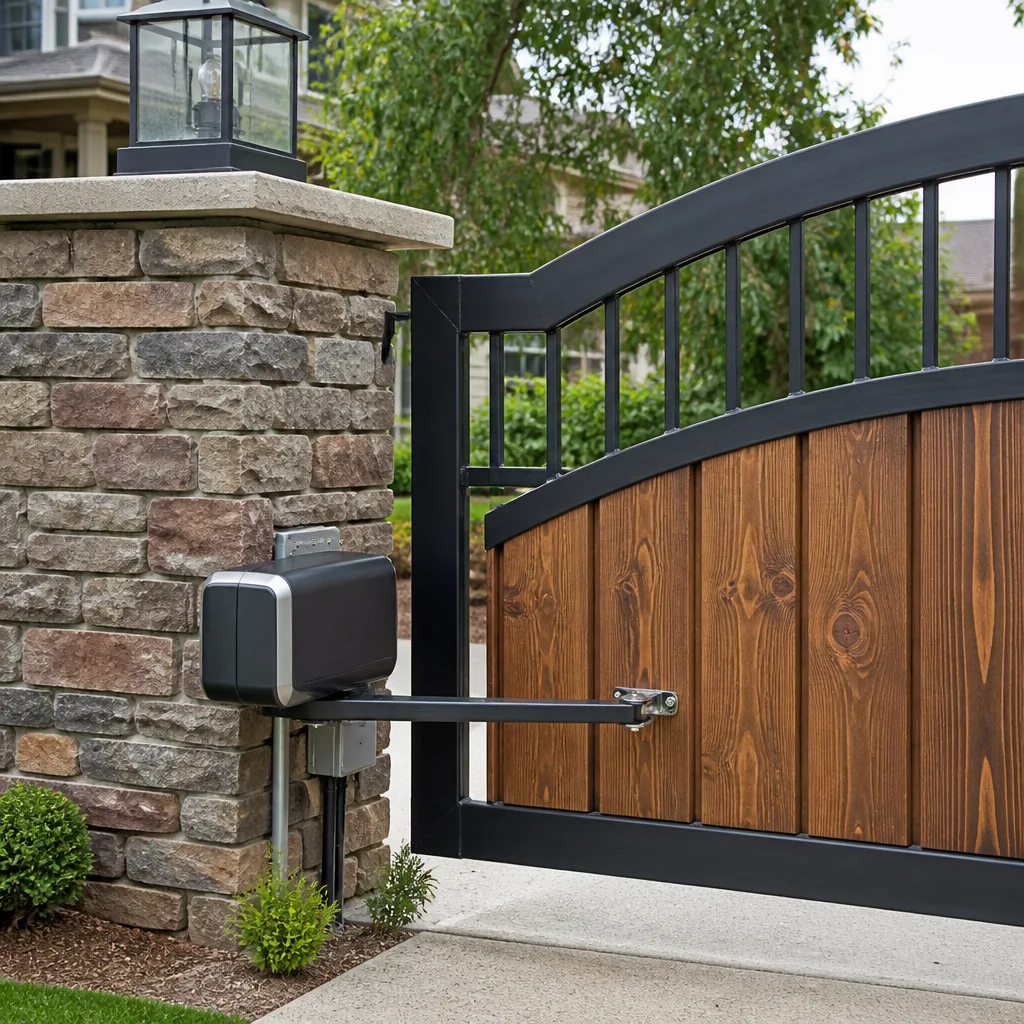
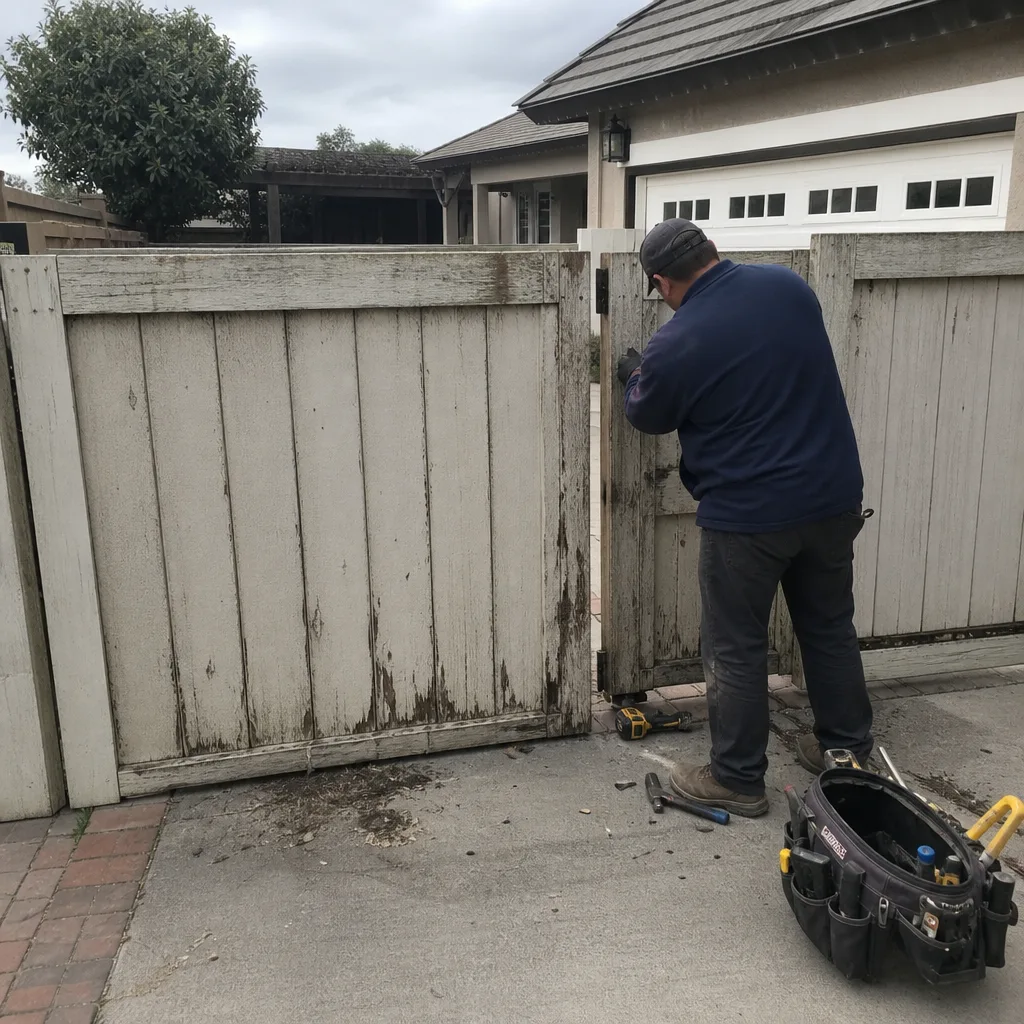 Before
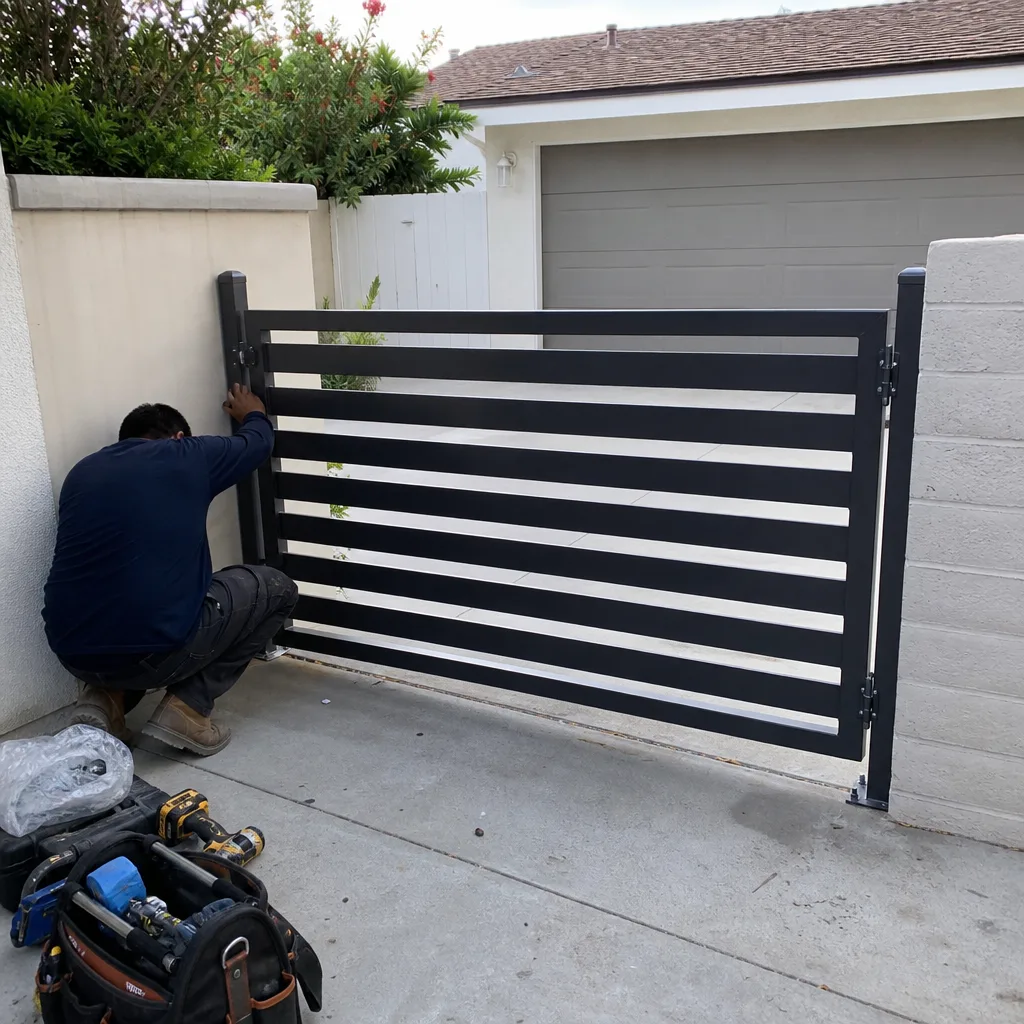 After
After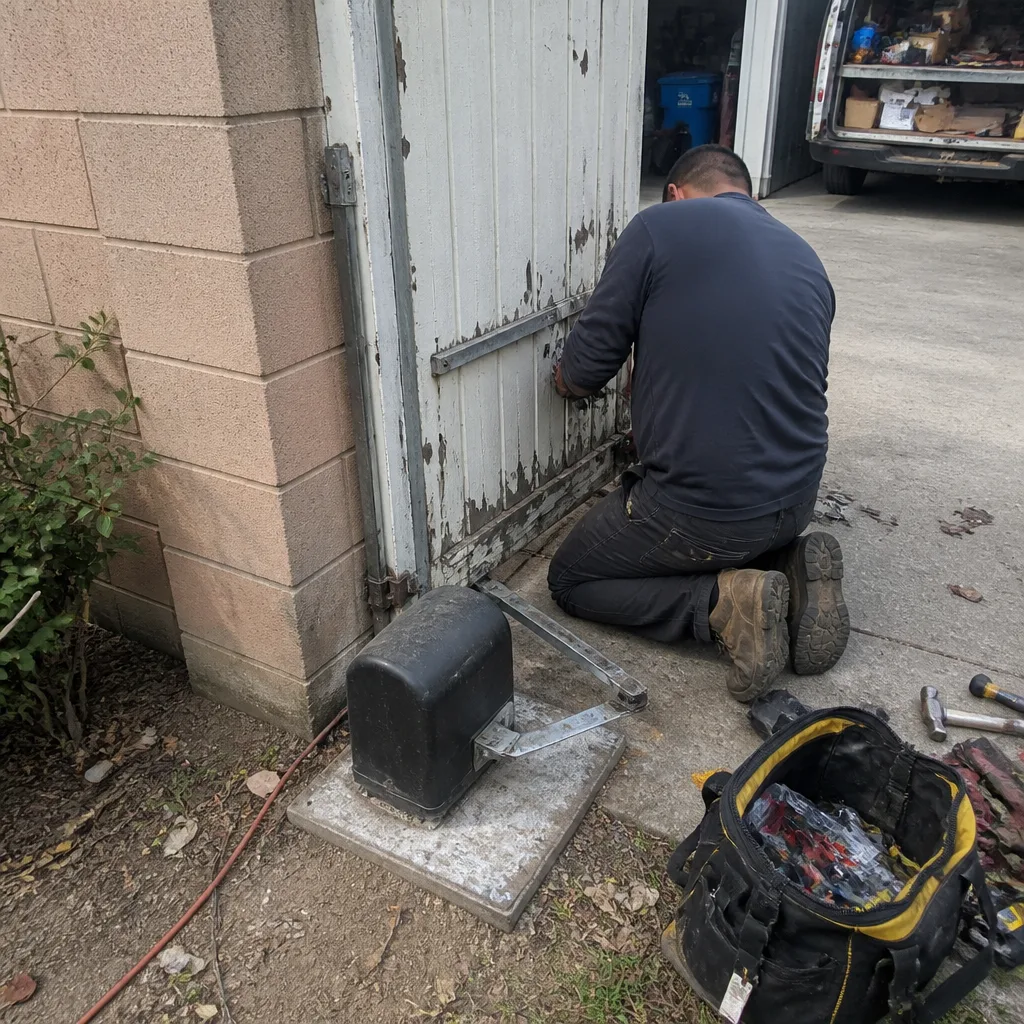 Before
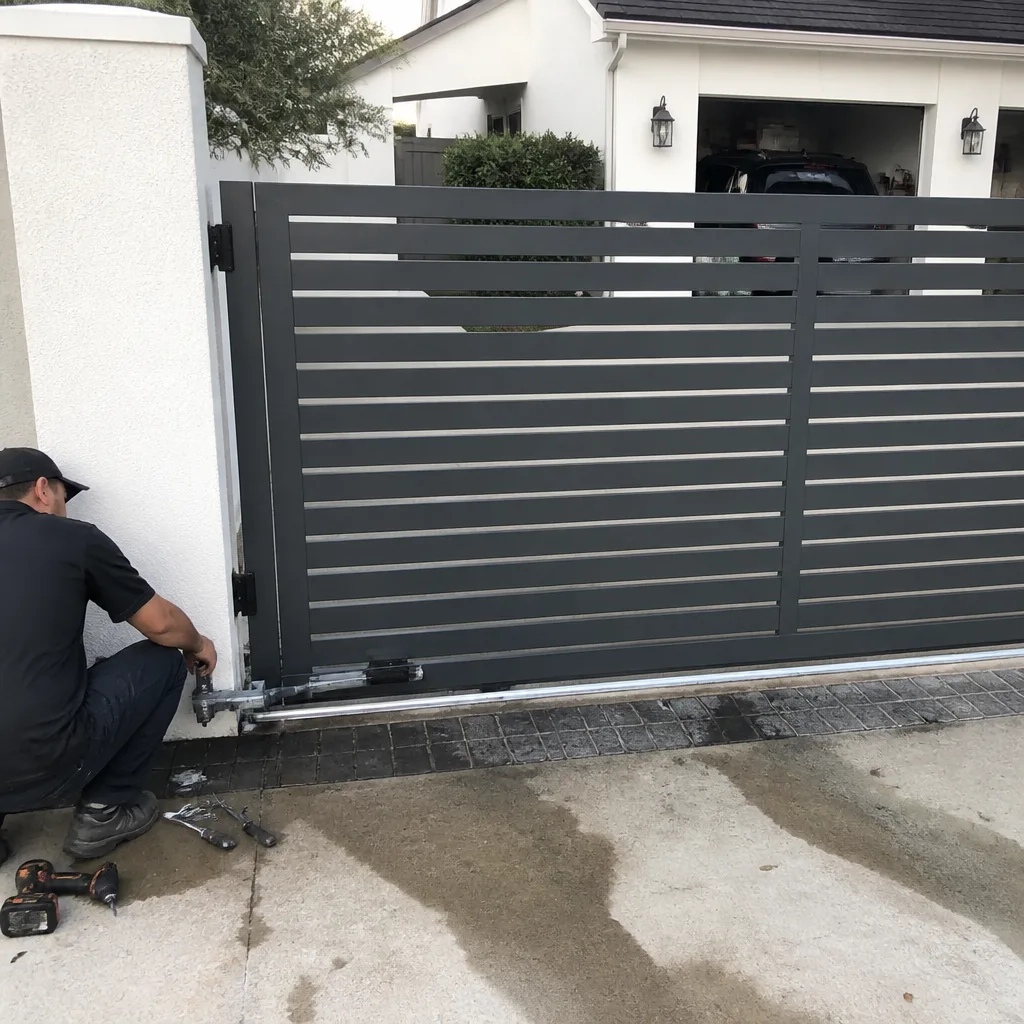 After
After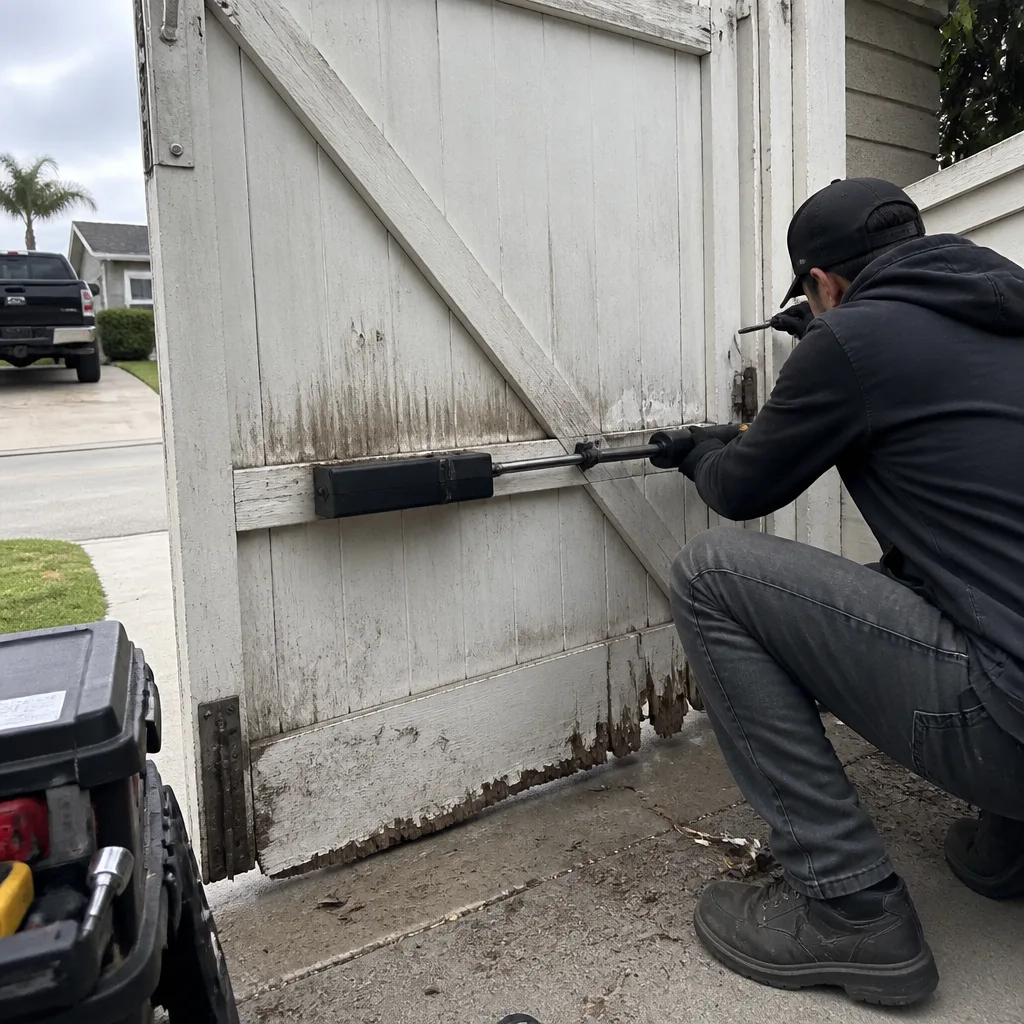 Before
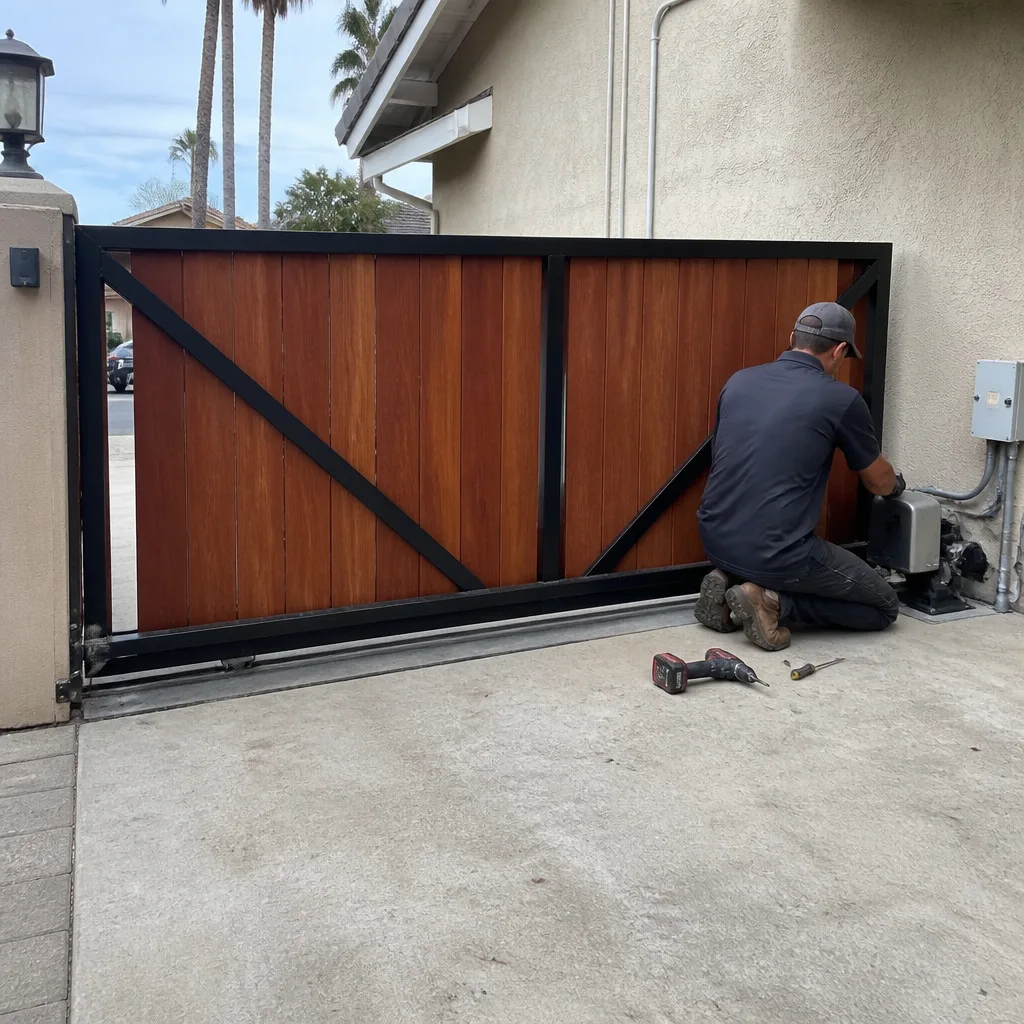 After
AfterGate Repair Permits, Codes & Inspections in CA: What You Need to Know
Most California homeowners are surprised to learn that a gate repair can trigger the same permitting process as a room addition. The truth is more nuanced than that, but the confusion is real. In Huntington Beach, where coastal salt air accelerates rust on steel and iron, we see gate failures that require everything from a simple hinge swap to a full structural rebuild. This guide walks through when permits are required, which codes govern your gate, what inspectors look for, and how to avoid the most expensive mistakes. Whether your gate is sagging on its post or the opener has stopped responding entirely, you’ll leave with a clear picture of what California actually requires.
Quick Answer
Most gate repairs in California do not require a building permit when you are replacing existing parts like hinges, wheels, or opener motors in-kind. However, new gate installations, structural modifications to posts or footings, and any electrical work on automated gates typically require a permit and inspection. In Huntington Beach, the city follows the California Building Code with local amendments, and gate operators must comply with UL 325 safety standards covering entrapment protection. When in doubt, a phone call to the city’s Building Division is free and takes five minutes.
Table of Contents
- Do You Need a Permit for Gate Repair in California?
- What the California Building Code Says About Gates
- UL 325 and Gate Operator Safety: The Non-Negotiable Standard
- Huntington Beach Gate Codes and Local Amendments
- Electrical Work on Automated Gates: Permits and Requirements
- What the Inspection Process Looks Like
- HOA and Coastal Requirements in Huntington Beach
- Common Mistakes to Avoid
- When to Call a Professional
- Frequently Asked Questions
- The Bottom Line
Do You Need a Permit for Gate Repair in California?
The short answer: most repairs do not require a permit, but the line between “repair” and “replacement” gets thin fast. The California Building Code (CBC) distinguishes between ordinary maintenance and work that changes the structure. Replacing a rusted hinge or a bent gate wheel is maintenance. Cutting out a failed post and pouring a new footing is structural work, and that is where the permit conversation starts.
Here is the practical breakdown we use when advising homeowners in Huntington Beach:
- No permit needed: hinge replacement, wheel or roller replacement, opener motor replacement (like-for-like), keypad replacement, sensor repair, welding cracks on an existing gate frame, replacing gate pickets or infill panels.
- Permit likely required: new gate installation on a new property or driveway, replacing a gate post that sits in concrete, widening a driveway opening, installing a new automated operator where none existed before, adding a pedestrian gate that changes the property line or setback.
- Gray area: full gate replacement that uses the existing posts and footings. Some cities treat this as maintenance. Others want a permit because the finished product differs from the original. Huntington Beach generally treats a like-for-like gate replacement on existing posts as exempt from a building permit, but the posts themselves must remain untouched.
The critical phrase in the code is “alteration to the structural system.” If you are not touching the posts, the footings, the concrete, or the electrical supply, you are usually in maintenance territory. If the posts are leaning, cracked, or showing rust at the base, that is a different conversation entirely. That rust is not a cosmetic problem. It means the steel inside the concrete is failing, and the fix involves demolition, rebar, and new concrete, all of which is inspected work.
What the California Building Code Says About Gates
The California Building Code is updated every three years, with the current edition based on the 2022 CBC. Gates fall under several sections, but the one that matters most to homeowners is Chapter 3, which covers building planning and addresses gates in the context of means of egress. For residential properties, the code is primarily concerned with two things: the gate cannot swing over a public sidewalk or into a public right-of-way, and the gate cannot trap someone against a structure when it opens.
Here are the code sections we reference most often on repair and installation calls:
- Swing direction: Residential driveway gates must swing inward, away from the street. A gate that swings outward over a public sidewalk is a code violation in most California jurisdictions, including Huntington Beach. This is one of the most common violations we see on older installations.
- Setback clearance: The gate must be set back far enough from the street that a vehicle can pull off the road completely before the gate opens. In Huntington Beach, this typically means the gate should be at least 15 to 20 feet from the curb line, though the exact number depends on the street classification. This is a safety measure designed to keep a stopped car from being rear-ended while waiting for the gate.
- Height restrictions: Residential gates in Huntington Beach are generally limited to 6 feet in height for side and rear yard gates, and 42 inches for gates in a front yard setback. Estate gates on large properties may be taller, but that requires design review. If your gate is over 7 feet tall or made of solid material, it may trigger additional engineering requirements for wind load. Coastal wind in Huntington Beach is not theoretical. We replace bent gate frames every spring after the Santa Ana season pushes 50-mile-per-hour gusts through the canyons.
- Structural loading: Any gate over 10 feet wide or over 400 pounds needs an engineered design. This is not optional. The inspector will want to see calculations for the hinge load, the post embedment, and the cantilever bending moment. A 16-foot iron gate hanging on 4×4 wooden posts is not just a code violation. It is a hazard waiting to fall on a car or a person.
The code book does not read like plain English, and that is intentional. It is a legal document. But the underlying logic is simple: gates fail at the post, and gate posts fail at the footing, and the code is designed to make sure neither happens on the public’s dime or the public’s safety. In our experience, about 30 percent of the gates we service in Huntington Beach were installed without a permit, usually by a previous homeowner or an unlicensed handyman. The current owner inherits that liability.
UL 325 and Gate Operator Safety: The Non-Negotiable Standard
UL 325 is the single most important safety standard for automated gates in the United States, and California adopted it into law. It governs entrapment protection, sensor requirements, and operator force limits. Every automated gate opener installed or serviced in California must comply with UL 325. If your gate opener was installed before 2001 and has never been retrofitted, it is almost certainly out of compliance, because the standard changed dramatically after a series of entrapment fatalities in the 1990s.
Here is what UL 325 requires on a residential gate opener:
- Two independent entrapment protection devices. This typically means a reversing mechanism in the motor (sensing resistance and reversing direction) plus a photoelectric sensor or contact edge. A homeowner cannot just install one sensor and call it good. The code requires redundancy, because the consequences of failure are severe.
- Contact sensors on the leading edge. If the gate swings toward a wall, fence, or fixed object, the leading edge must have a pressure-sensitive strip that stops and reverses the gate on contact. We service Gates with Linear and Viking operators in Huntington Beach that have never had contact edges installed. That is a violation, and it is dangerous.
- Force limiting set to manufacturer spec. The operator must stop and reverse when it encounters resistance above the manufacturer’s maximum allowed force. A gate that can crush a 2×4 is a gate that can crush a child. This setting is adjusted during installation and should be verified during any repair that involves the motor or control board.
- Warning signs posted. Every automated gate must have a warning sign affixed to both sides of the gate, visible from both the interior and exterior. The sign must be legible and permanently mounted. We sell replacement signs for a few dollars and hand them out on repair visits. It is the cheapest compliance item on the list, and the one inspectors notice first.
- Manual release accessible from the outside. If the power fails or the opener locks up, there must be a way to disconnect the gate from the operator from the outside of the property. In Huntington Beach, where fire evacuation is a real concern in the canyon-adjacent neighborhoods, this is not a convenience. It is a life safety requirement.
We are certified to service nine gate opener brands including Linear, Viking, Ghost Controls, and DoorKing, and the UL 325 requirements are similar across all of them. The brands differ in how the settings are accessed, not in what the settings must do. A Viking operator and a DoorKing operator both need two entrapment protection devices. A Ghost Controls system on a solar-powered gate still needs a functioning manual release. The standard does not bend for convenience.
Huntington Beach Gate Codes and Local Amendments
Huntington Beach operates its own Building Division under the Huntington Beach Municipal Code, and it adopts the California Building Code with local amendments. The city is one of the stricter jurisdictions in Orange County when it comes to front yard structures, because Huntington Beach has historically protected its beach-adjacent aesthetic and its sight lines. If your home is in the coastal zone or a historic district, additional rules apply.
What we tell homeowners in Huntington Beach specifically:
- The city wants photos. In many cases, the Building Division will issue a permit based on submitted photos and a site plan without requiring a pre-permit site visit. Take clear photos of the existing gate, the posts, the driveway, and the street view. The more complete your application, the faster it moves.
- Setback rules are enforced. Gates in a front yard setback cannot exceed 42 inches in height if they are solid. If you want a 6-foot privacy gate at the front of your property in Huntington Beach, it needs to be set back from the property line far enough that it is not in the front yard setback. The exact setback depends on your zoning district. Pull your zoning from the city’s GIS map before planning anything.
- Coastal zone restrictions. Homes west of Pacific Coast Highway fall under the California Coastal Commission’s jurisdiction in addition to the city’s. This can mean a longer permit process and additional design review. If your property is between PCH and the beach, budget for a Coastal Development Permit, which is a separate application from the building permit and takes longer.
- Electric gate openers need a separate electrical permit. This is true statewide, but Huntington Beach enforces it. The permit covers the power run from your panel to the operator. In most cases, it needs to be on a dedicated circuit with a GFCI-protected outlet at the operator location. We see a lot of older Huntington Beach homes where the gate opener is piggybacked onto an existing exterior outlet that is not GFCI-protected. That gets flagged on inspection.
The city’s inspectors are reasonable people. They are not looking to fail projects. They are looking for the things that go wrong in real life: a gate that swings over the sidewalk, a post that is under-embedded for the weight of the gate, an opener that lacks entrapment protection. Most of the failed inspections we hear about come from projects that were never designed to comply in the first place.
Electrical Work on Automated Gates: Permits and Requirements
Any time you are running new electrical wire to a gate operator, installing a new circuit, or upgrading from a solar panel to hardwired power, you need an electrical permit in California. This is not a gate-specific rule. It is the same National Electrical Code (NEC) and California Electrical Code (CEC) requirement that applies to any new branch circuit. The permit is typically issued as part of the overall building permit for a new gate installation, or as a standalone electrical permit for an opener retrofit.
Here is what the electrical side of a gate project involves:
- Dedicated circuit. The gate opener should be on its own 15-amp or 20-amp circuit, depending on the operator’s specifications. A Viking or DoorKing operator on a shared circuit with landscape lighting or a pool pump is a recipe for nuisance tripping and intermittent operation.
- GFCI protection. The outlet or disconnect at the gate operator must be GFCI-protected. This is an NEC requirement for outdoor receptacles, and it applies regardless of whether the outlet is in a weatherproof box. Salt air in Huntington Beach accelerates corrosion on electrical connections, and a GFCI is your first line of defense against a ground fault.
- Proper burial depth. If the power run goes underground, direct-burial cable must be at least 18 inches deep, or 24 inches under a driveway. Conduit runs have different depth requirements. Shallow-buried wire is the most common electrical defect we find on older Huntington Beach gate installations, often because a previous homeowner or gardener ran an extension cord out to the gate and buried it a few inches deep.
- Disconnect within sight. The code requires a means of disconnect within sight of the operator. In practice, this means a weatherproof switch box mounted on the gate post or a nearby wall. The fire department wants to be able to cut power to the gate quickly in an emergency.
If your existing gate opener is already working and you are only replacing the motor, the control board, or a sensor, an electrical permit is generally not required, because you are not modifying the branch circuit. But if the work involves running new wire, adding an outlet, or rewiring the connection from the panel, the permit is non-negotiable. We handle the full electrical scope on gate projects in Huntington Beach, and we pull the permit when the work requires it. That is a service we provide, not something we ask the homeowner to navigate alone.
What the Inspection Process Looks Like
If your gate project does require a permit, here is the sequence you can expect, step by step:
- Submit the application. You will need a simple site plan showing the gate location, setback distances, and the existing structures on the property. In Huntington Beach, this can be submitted online through the city’s permit portal. Include photos. The plans examiners review gate permits quickly because the scope is limited.
- Pay the permit fee. Gate permit fees in Huntington Beach are modest compared to full construction permits. Expect to pay a few hundred dollars depending on the project scope. Electrical permits are often a flat fee.
- Complete the work. The contractor installs the posts, hangs the gate, runs the electrical, and mounts the operator. Everything must be done to code before the inspector arrives. Do not schedule the inspection until the work is complete.
- Schedule the inspection. The city typically offers next-day inspections if you call before a certain cut-off time. The inspector will check the post embedment, the gate swing, the UL 325 entrapment protection, the electrical installation, and the setback distance.
- Pass or correct. Most gate inspections pass on the first visit when the work was done by someone who understands the code. If a correction is required, the inspector will list it on the correction notice, and you reschedule once the items are fixed. The re-inspection fee in Huntington Beach is small.
The inspection itself usually takes 15 to 20 minutes. The inspector is not going to crawl under the gate with a torque wrench. They are looking at the obvious things: is the gate swinging in the right direction, is the post plumb, is the entrapment protection working when they block the sensor, is the electrical connection in a weatherproof box. We have had inspectors in Huntington Beach ask to run the gate through a full cycle to watch the reversing mechanism engage. That is a good inspector doing their job.
HOA and Coastal Requirements in Huntington Beach
Huntington Beach has a patchwork of homeowners associations, and some of them have design standards for gates that are stricter than the city code. If your home is in a gated community, an HOA with architectural review, or a neighborhood with a specific design character, check the HOA’s rules before you start any gate work. An HOA can require that your gate match a specific material, color, or style, and they can fine you for non-compliance even if the city has already approved the permit.
We see this most often in the newer planned communities in east Huntington Beach, where the HOA may require ornamental iron with a specific powder-coat color, or prohibit solid wood gates entirely. The HOA does not issue building permits. Their authority comes from the deed restrictions you agreed to when you bought the home. The approval processes are separate, and they run on different timelines. An HOA architectural review can take 30 to 60 days. The city permit takes a week or two. Start with the slower process first.
For coastal properties, the California Coastal Commission adds another layer. The Commission’s jurisdiction applies to the area between the first public road and the ocean, which in Huntington Beach means everything west of Pacific Coast Highway, and some areas east of PCH if they are within 1,000 yards of the mean high tide line. A Coastal Development Permit is required for new gate installations in the coastal zone, and the review includes coastal access, visual impact, and consistency with the Local Coastal Program. Repairs that do not change the gate’s size, location, or appearance are generally exempt. If your gate is rusting and you want to replace it with the same size and style in the same location, you are likely fine. If you want to raise it, move it, or change the material, expect a longer review.
Common Mistakes to Avoid
- Ignoring the swinging direction rule. A gate that swings outward over the sidewalk is a code violation and a liability. We see this most often when a homeowner or handyman hangs a gate backwards because it was easier to mount the hinges on the outside face. It is never okay, and it is the first thing an inspector will flag in Huntington Beach.
- Pouring a new footing without a permit. The homeowner reasoning is usually “it is just a post hole.” The inspector sees structural work in a load-bearing condition. A new footing for a gate post is structural. If the gate fails and injures someone, the unpermitted work becomes the homeowner’s legal and financial problem.
- Burying an extension cord to power a gate opener. This is the most common electrical shortcut we find on Huntington Beach properties with automated gates. Extension cord wire is not rated for direct burial, not protected by a proper breaker, and not GFCI-protected. It is a fire hazard and a code violation.
- Installing an opener without entrapment protection. A used gate opener from Craigslist or a big-box store installed without photoelectric sensors or a contact edge is a UL 325 violation. The gate will work, and it will be dangerous. This is not a corner worth cutting.
- Overbuilding without checking height and setback rules. A 7-foot solid gate at the front property line might feel like a security upgrade, but in Huntington Beach it likely violates the front yard setback height limit. The fix is a new gate or a variance, and neither is cheap.
- Forgetting the manual release requirement. Power goes out. Operators fail. If no one can open the gate from outside during a power outage or an emergency, the gate has trapped the property. Fire departments in Huntington Beach have had to cut gates off their hinges during emergencies. That is a $3,000 repair for a $50 release mechanism.
- Skipping the HOA review. The city permit is not the last word. If your HOA requires architectural approval for gate changes and you skip it, you can be forced to remove or modify the gate even after the city has signed off. The HOA approval process is slow. Start it early.
When to Call a Professional
There are gate projects a homeowner can handle with a wrench and a trip to the hardware store, and there are gate projects that need a permit, a concrete pour, and an electrician. The line is usually drawn at the post. If your gate post is leaning, cracked at the base, or rusted through below the concrete line, that is structural work. The fix requires digging out the old footing, pouring new concrete, setting new steel, and re-hanging the gate so it closes with the right reveal. This is not a weekend project. If your automated gate is moving slower than it used to, stopping mid-cycle, or the opener is making a grinding sound, the problem is likely in the operator or the drive hardware. That work requires UL 325 compliance and the right diagnostic tools. Ironworks Gate Co. offers free estimates in Huntington Beach. Call (424) 999-7545 and a live person will answer, day or night.
Frequently Asked Questions
No permit is required to replace a gate opener motor, control board, or sensor like-for-like, as long as the replacement does not involve new electrical wiring or a change in the opener’s mounting. If the replacement requires running a new circuit from your panel, adding an outlet, or upgrading the power supply, you need an electrical permit. Call the Huntington Beach Building Division for clarification, or call us at (424) 999-7545 and we will tell you whether your specific repair requires a permit.
Gate permit fees in Huntington Beach vary by project scope, but most residential gate permits fall in the $150 to $400 range, with electrical permits sometimes issued as a separate flat fee. The exact cost depends on the value of the work, which the city calculates from your application. For an exact quote on your project including the permit, call (424) 999-7545. Estimates are free.
Yes, California allows homeowners to install their own gate openers on their own property, provided the work complies with UL 325 safety standards and the electrical work is permitted. The risk is not the permit. It is the entrapment protection, which is technically specific and life-critical. Most DIY opener installations we see in Huntington Beach are missing at least one required safety device. The hardware store will sell you the opener. It will not teach you how to set the force limits correctly.
Unpermitted gate work is a common situation in Huntington Beach, especially on older homes with multiple previous owners. The city does not proactively hunt for unpermitted gates, but the issue surfaces when the property is sold. Buyers’ inspectors flag unpermitted structures, and lenders can condition financing on retroactive permitting. In most cases, the city will accept a retroactive permit application if the work meets current code. If it does not meet code, the gate has to be brought into compliance.
Yes. UL 325 applies to every automated gate operator regardless of power source. A solar-powered Ghost Controls opener on a remote Huntington Beach hillside must have the same two entrapment protection devices, the same manual release accessibility, and the same warning signage as a hardwired DoorKing operator. The power source changes the installation, not the safety standard.
Most straightforward gate permits in Huntington Beach are issued within one to two weeks. The review is quick because the scope is limited, and the city’s online permit portal has streamlined the submission process. Coastal properties add time because of the additional Coastal Commission review, which can extend the timeline by 30 to 60 days. HOA architectural review runs on a separate track and can take 30 days or more. Plan the full timeline before scheduling the work. Call (424) 999-7545 for a realistic schedule on your specific property.
The Bottom Line
California gate permits and code requirements are not as intimidating as they seem, but they are specific. Most repairs are exempt. Most installations are not. The dividing line is structural work, and the rules exist for reasons that are written in accident reports, not building textbooks. UL 325 is the standard that keeps your family and your neighbors safe around automated gates. If you are in Huntington Beach and you are not sure whether your gate project needs a permit, make the call before you make the cut. The city will tell you. We will tell you. It costs nothing to ask, and it is a lot cheaper to comply before the concrete is poured than after the inspection fails. For a full guide to our services, start at the Ironworks Gate Co. home page, and when you are ready to talk to a person, call (424) 999-7545. A live person answers, 24 hours a day, seven days a week.
Written by Victor Salinas, Owner at Ironworks Gate Co., serving Huntington Beach since 2013.