
Last updated August 25, 2026
Free on-site gate assessment - hinges, posts, and your LiftMaster or Nice gate operator checked before anything is quoted
The assessment is free and the quote is the invoice.
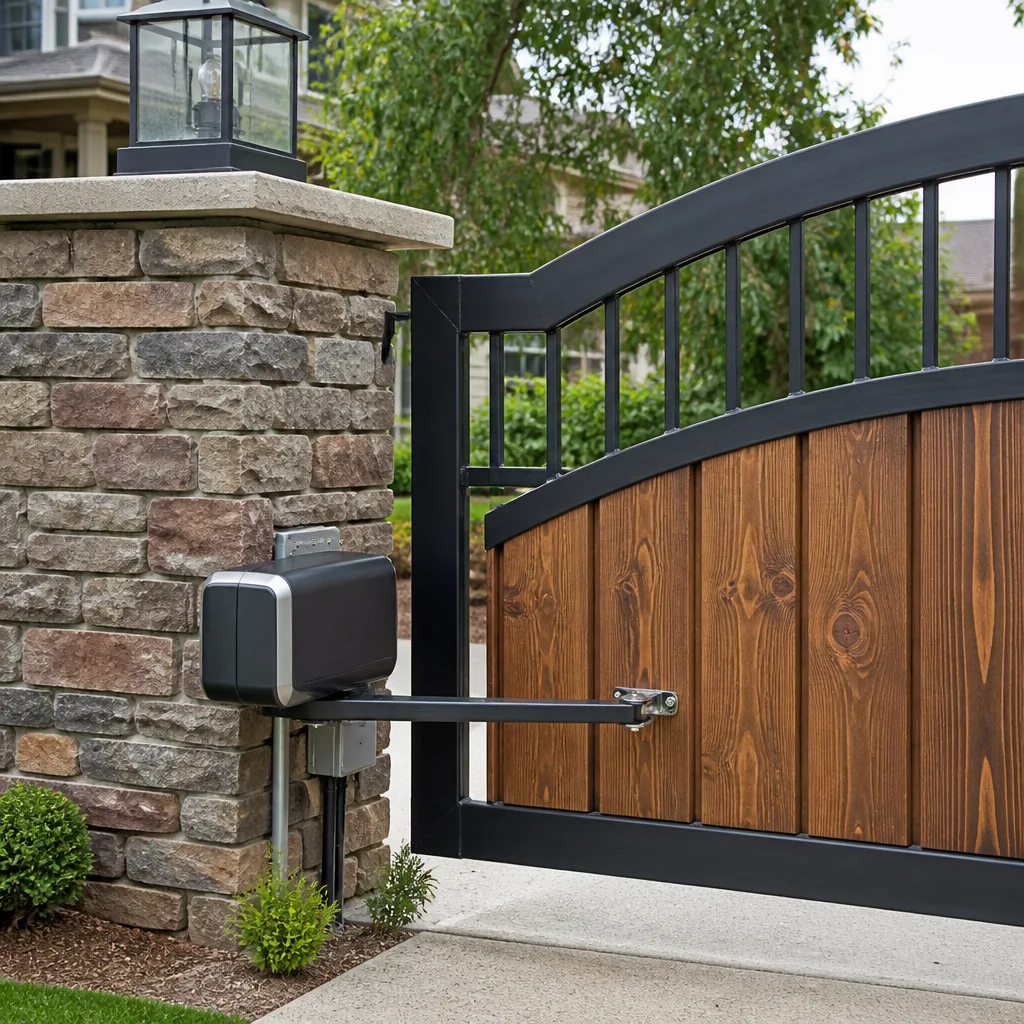
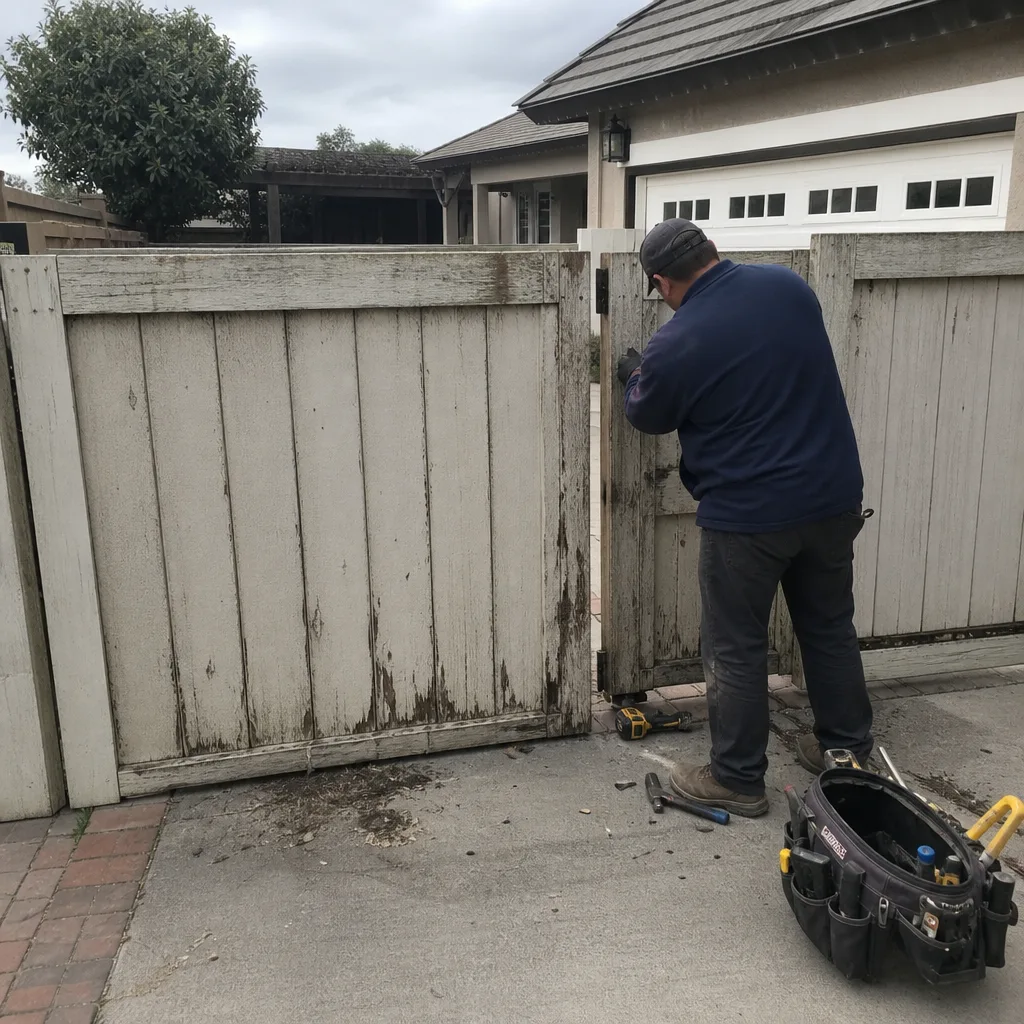 Before
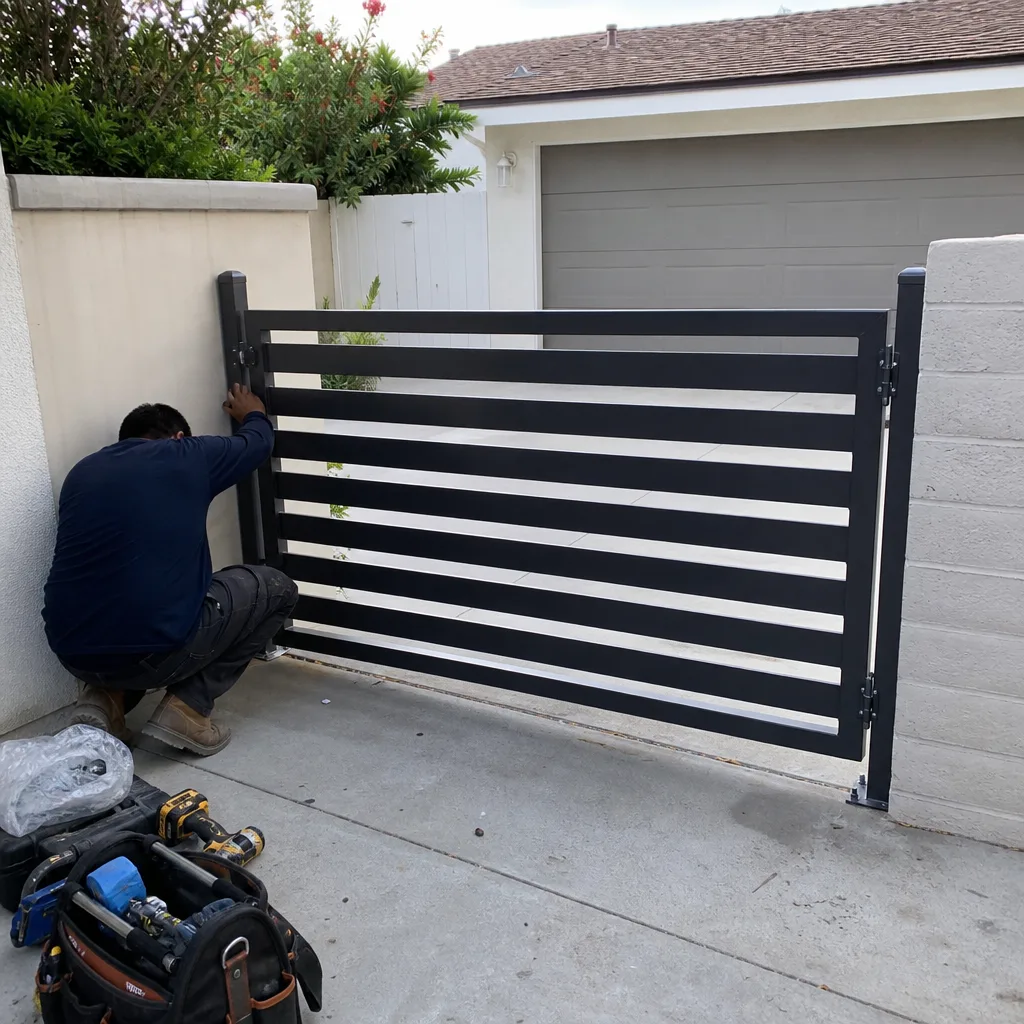 After
After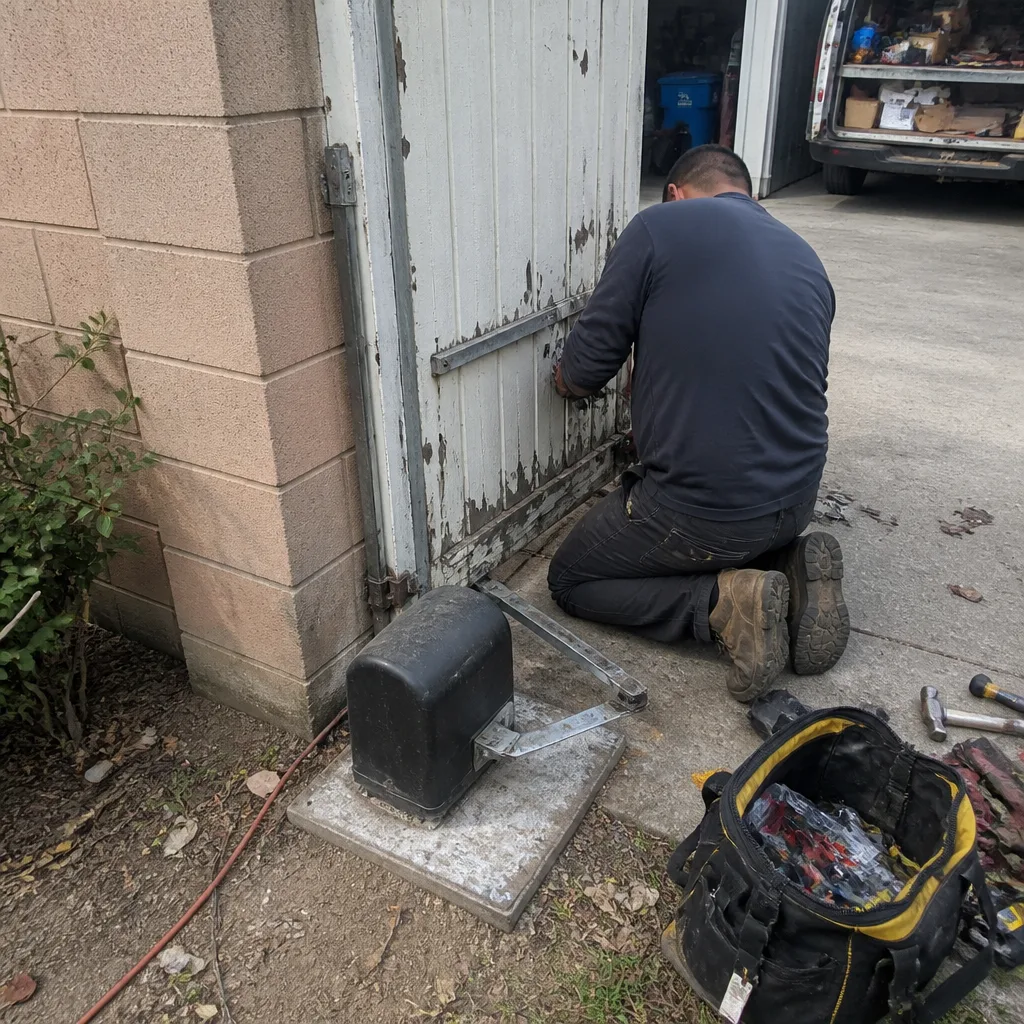 Before
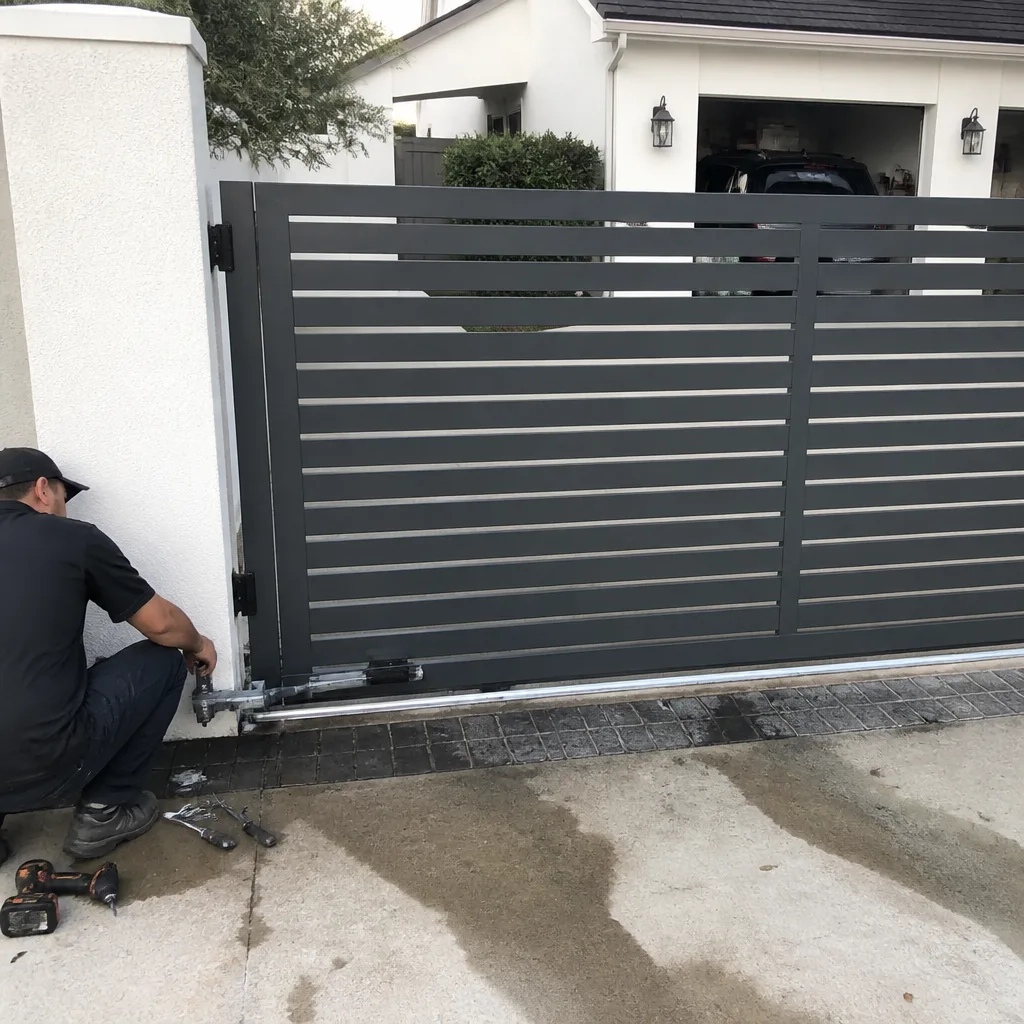 After
After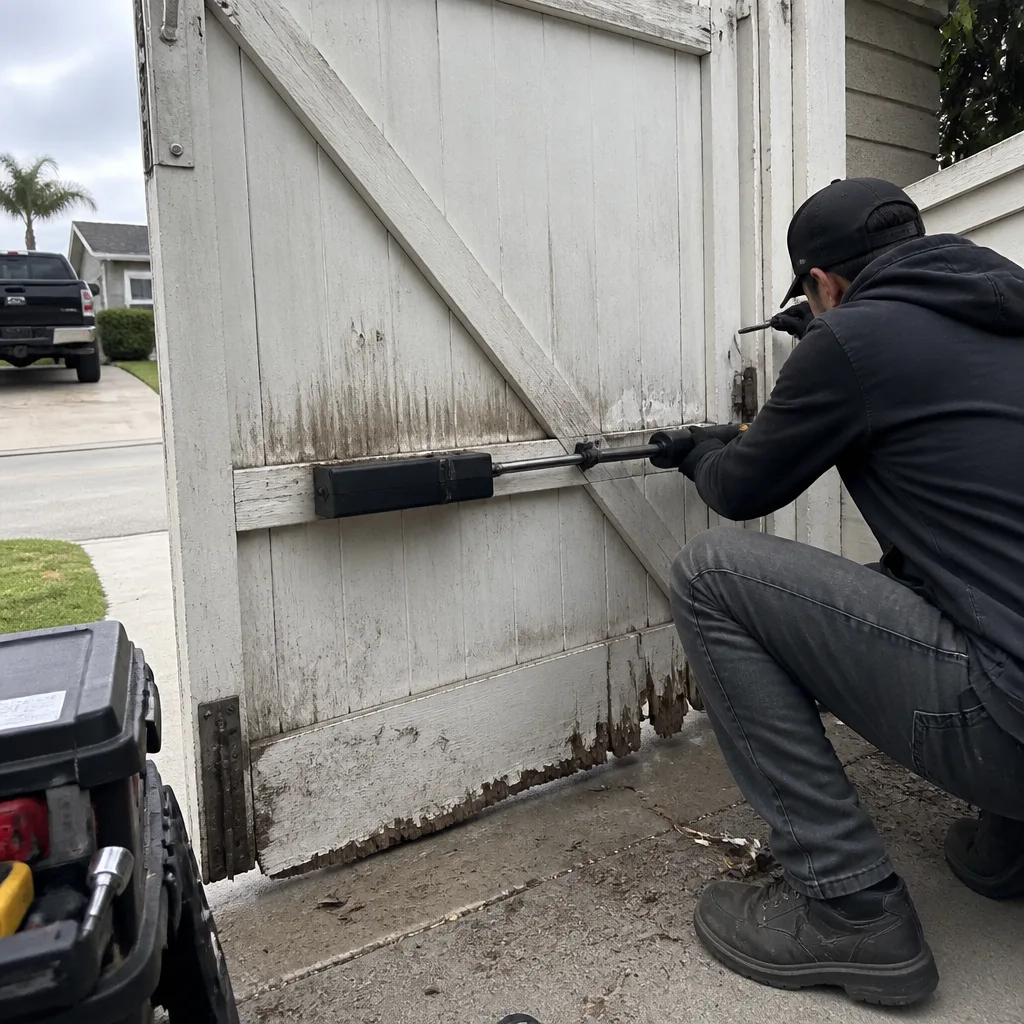 Before
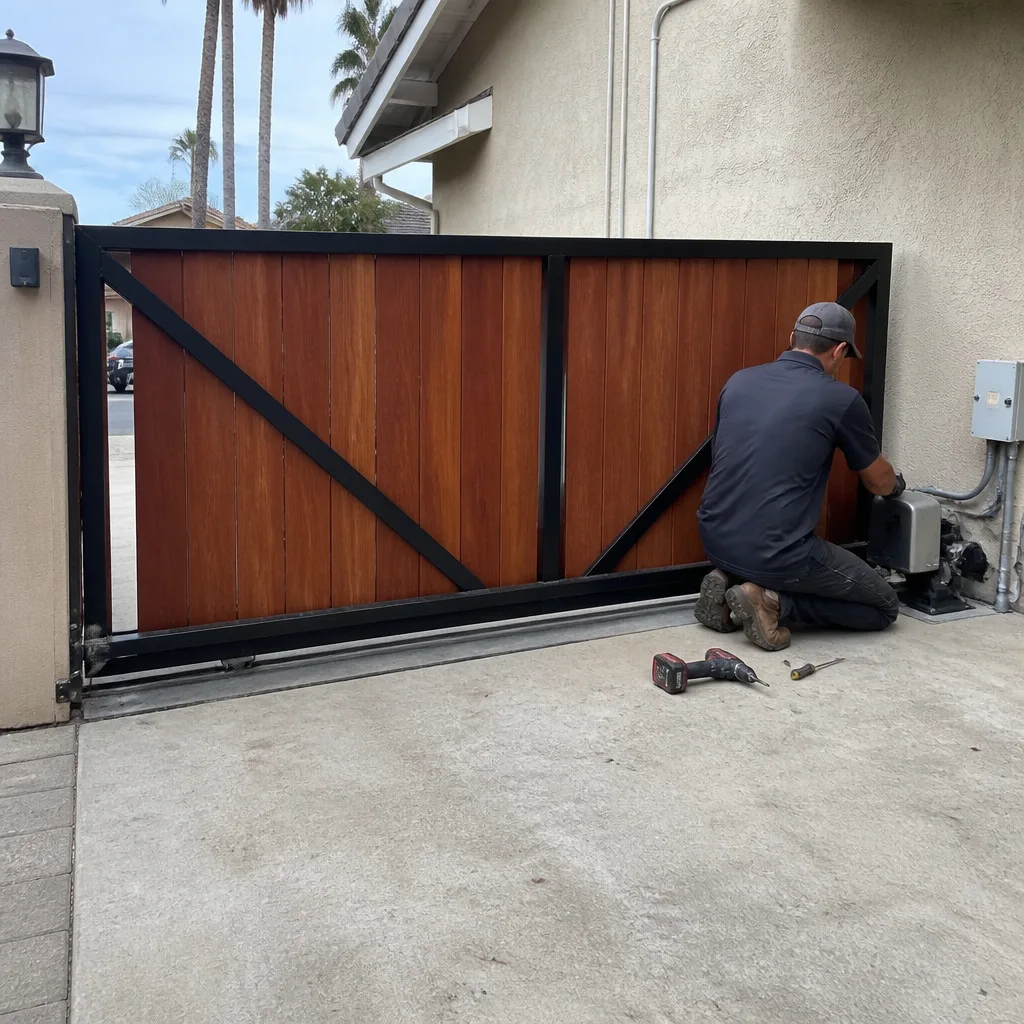 After
AfterDIY vs Professional Gate Repair: The Huntington Beach Homeowner’s Decision Guide
Here’s a number that surprises most Huntington Beach homeowners: roughly half of all gate service calls we run involve repairing a previous DIY attempt before we even get to the original problem. The driveway gate is one of the few systems on a property where a small miscalculation, a few inches of misalignment, or the wrong replacement part can turn a $150 weekend project into a $900 repair. This guide walks through what actually goes wrong, what a homeowner can realistically handle, and where the line is between saving a few dollars and costing yourself a full replacement. We’ll cover real Huntington Beach conditions: salt air, soil movement, security expectations, and the gate automation brands most common in this city’s neighborhoods.
Quick Answer
Most Huntington Beach homeowners can safely handle cosmetic maintenance like cleaning, lubricating hinges, and tightening visible bolts, but any repair involving gate automation, structural alignment, welding, or safety sensors should be left to a professional. The deciding question is not whether you can attempt the repair, but whether a mistake would put your security, your vehicle, or your family at risk. If the gate is heavy, motorized, or protects the only entry to your property, professional repair is the lower-cost decision in the long run.
Table of Contents
- Understanding What You’re Actually Dealing With
- What a Homeowner Can Realistically Handle
- Where Professional Repair Is the Only Sensible Option
- The Real Cost Comparison: DIY vs Professional in Huntington Beach
- How Huntington Beach Conditions Affect Gate Wear and Repair
- Safety Considerations That Should End the DIY Debate
- Common Mistakes to Avoid
- When to Call a Professional
- Frequently Asked Questions
- The Bottom Line
Understanding What You’re Actually Dealing With
Before deciding whether to pick up a wrench or pick up the phone, it helps to understand what a driveway gate actually is. A gate is not a single object. It’s a system: a heavy steel or wood panel, a set of hinges, a track or pivot point, an opener motor, a control board, safety sensors, a keypad or remote receiver, and electrical wiring that connects all of it. Each component ages at a different rate in Huntington Beach’s coastal environment, and each component fails in its own way.
A sliding gate on a track, common in the wider lots near Edwards Hill and Seacliff, deals with different stresses than a swing gate on hinges, which is more typical in neighborhoods like Huntington Harbour and the older tracts near Main Street. Sliding gates collect sand and debris in their tracks. Swing gates sag at the hinges as the post settles. Motorized gates add control boards that corrode in salt air and sensors that lose alignment when the ground shifts.
Most homeowners we talk to in Huntington Beach have never opened the control box on their gate opener. That’s not a criticism. It’s a reality that shapes the DIY decision. If you don’t know which component is failing, you can’t know whether you’re fixing it or just moving the problem to a more expensive part of the system.
What a Homeowner Can Realistically Handle
There is a legitimate category of gate maintenance that a careful Huntington Beach homeowner can handle without calling anyone. These are tasks that don’t require specialized tools, don’t involve electricity or tension, and don’t carry much risk of making things worse. Done regularly, they genuinely extend the life of a gate.
- Cleaning the track on a sliding gate. Huntington Beach’s coastal breeze carries fine sand that collects in gate tracks. Clearing the track with a stiff brush and rinsing it with a hose every few months prevents the grinding that eventually damages wheels and rollers.
- Lubricating hinges and rollers. A silicone-based lubricant applied to hinge points and track rollers once or twice a year keeps a gate moving smoothly and quietly. Use a product meant for metal-to-metal contact; WD-40 is not a lubricant and will attract sand.
- Tightening visible bolts and lag screws. Gate hardware vibrates loose over time. A socket wrench and fifteen minutes can snug up bolts on hinge brackets, latch posts, and track stops.
- Clearing photo-eye sensors. If your gate reverses or refuses to close, the first step is wiping the small lenses on the safety sensors near the bottom of the gate opening. Dirt, spider webs, and salt film cause most phantom sensor failures.
- Checking for obvious physical obstruction. A branch, a child’s toy, or a buildup of landscape material under the gate path is a common cause of erratic operation. Clearing it is straightforward.
Notice what’s not on this list: no electrical work, no spring or cable replacement, no hinge replacement, no control board diagnostics, no welding. The line between maintenance and repair is often where the line between DIY and professional should be drawn.
Seasonal Maintenance in Huntington Beach
Huntington Beach has a relatively mild climate, which means gates don’t face freeze-thaw cycles like inland communities. But the marine layer and salt air work constantly. We recommend a seasonal check on your gate in early spring and early fall: clean the track, inspect visible hardware, test the safety sensors, and listen for any new grinding or squealing. If the gate has started moving slower or stopping short, that’s the time to address it, before a minor issue becomes a stranded car in the driveway.
Where Professional Repair Is the Only Sensible Option
Some gate repairs are simply not DIY territory. The reasons are not about gatekeeping a trade; they’re about physics, electricity, and liability. Here are the situations where a Huntington Beach homeowner should call a gate specialist rather than attempt a fix.
Gate Automation and Opener Repair
A gate opener is a motor, a control board, and a series of safety circuits. Diagnosing a failure means testing with a multimeter, reading control board error codes, and understanding how the opener’s force settings interact with the gate’s actual weight and travel. Most of the gates we service in Huntington Beach run on one of a handful of openers: Linear, Viking, Ghost Controls, or DoorKing are common in this area, and each has its own diagnostic procedures and parts availability. A homeowner who opens the control box and starts swapping wires is working on a system that can hold a charge even when unplugged and can be damaged by a single misplaced connection.
Structural Repairs: Hinges, Posts, and Welds
When a hinge breaks or a post shifts, the gate’s entire geometry changes. A gate that hangs 1/8 inch lower at the latch end than at the hinge end will not latch properly, will drag on the ground, and will eventually bend the hinge brackets. Fixing this requires lifting the gate, shimming or replacing hinges, sometimes welding cracked brackets, and re-checking the full swing arc. A homeowner with a floor jack and good intentions can easily create a worse misalignment. Worse, a gate that comes off its hinges is a serious injury risk. These gates weigh anywhere from 200 to over 800 pounds depending on length and material.
Safety Sensor and Edge Repairs
Modern gate openers in Huntington Beach are required to meet safety standards that include photoelectric sensors and, on many installations, reversing edges. These are the components that stop a closing gate when a person, pet, or vehicle is in the path. If a sensor is misaligned, a gate may refuse to close, but if a sensor is bypassed or wired incorrectly, the gate becomes a crush hazard. This is not a repair to attempt by trial and error. The liability alone, for a homeowner, should rule it out.
Electrical Work and Power Runs
Running power to a gate opener, replacing a junction box, or repairing a damaged underground feed in Huntington Beach means working with line voltage and, increasingly, with low-voltage landscape circuits that can be confused with gate wiring. This work requires permits in many cases and must meet local electrical code. A mistake here is not just a broken gate; it can be a fire risk or a shock hazard.
The Real Cost Comparison: DIY vs Professional in Huntington Beach
Let’s talk about money directly, because this is where the DIY appeal lives. A homeowner looks at a $300 professional repair and a $40 part online and thinks the difference is $260. That math usually misses the real costs.
Start with parts. Gate parts are not standardized. A hinge bracket for one brand of gate is not interchangeable with another. Ordering the wrong part means shipping costs, lost time, and often a restocking fee. Then there’s the tooling. A proper repair on a motorized gate usually requires tools a typical Huntington Beach household doesn’t own: a multimeter, a torque wrench, heavy-duty come-along or gate jack, sometimes a welder for steel gate repair. Renting or buying those tools closes the gap quickly.
Then there’s the failure cost, which is what most people forget. If a DIY repair doesn’t hold, the original problem is still there and now there may be secondary damage. A gate opener burning out because the gate was too heavy for the force settings. A control board fried because a wire landed on the wrong terminal. A gate off its track because the rollers were replaced with the wrong size. Professional repair now costs more than it would have before the DIY attempt.
Here are typical price ranges for gate repairs in the Huntington Beach market, based on what we see across this area’s neighborhoods:
- Sensor alignment or cleaning: $75-$150. This is the repair homeowners most often attempt first and most often give up on.
- Hinge replacement on a standard swing gate: $250-$500 depending on gate weight and whether welding is required.
- Gate opener diagnosis and minor repair: $180-$340. Full opener replacement, including labor, typically runs $900-$1,800 depending on brand and gate size.
- Track repair or replacement on a sliding gate: $300-$700 depending on track length and whether the wheels need replacement.
- Full gate realignment service: $200-$400 for a standard residential gate.
These are honest ranges, not quotes. Every gate is different, and we quote every job before any work begins. A professional quote should always be free and should always be in writing.
How Huntington Beach Conditions Affect Gate Wear and Repair
Huntington Beach is not like other Southern California cities when it comes to what a gate endures. The coastal marine layer sits over this city most mornings, which means metal is regularly exposed to moisture-laden salt air. That’s the single biggest factor we see in gate deterioration here, more than heat, more than sun exposure.
Salt Air and Corrosion
Steel gates in Huntington Beach, especially within a mile or two of Pacific Coast Highway, corrode faster than identical gates in Fountain Valley or Westminster. Hinge pins rust, weld points oxidize, control board contacts corrode, and the zinc coating on hardware wears through years earlier than a homeowner expects. This is why we recommend stainless steel or powder-coated hardware anywhere near the coast, and why we treat every hardware replacement on a Huntington Beach gate as a coastal application.
Soil Movement
Huntington Beach sits on a mix of sandy soil and, in some neighborhoods like the areas near the Bolsa Chica wetlands, expansive clay. Gate posts set in concrete can shift over time as the soil expands and contracts with moisture. A gate that closed perfectly for a decade may gradually start catching at the latch or dragging at the bottom. This is a structural issue, not an opener issue, and it usually requires resetting or shimming the gate rather than adjusting the opener travel limits.
Neighborhood Gate Styles
Huntington Beach has a wide variety of gate styles depending on when the home was built. The older tracts near Downtown and around Goldenwest Street often have shorter, lighter swing gates that are easier to keep aligned. The newer developments and custom homes in areas like Edwards Hill and the waterfront neighborhoods have longer, heavier gates, often on slide tracks, with more sophisticated openers. The bigger the gate, the less forgiving it is of DIY mistakes.
Safety Considerations That Should End the DIY Debate
There is a safety conversation that outweighs cost on any gate repair, and it’s one we have honestly with Huntington Beach homeowners. A driveway gate is a motorized barrier that can weigh several hundred pounds. It is designed to move under force. When that force is misdirected, either by a failed hinge or an improperly set opener, the gate becomes dangerous.
Children and pets are the most vulnerable. A gate that closes unexpectedly because the safety sensors were bypassed, or a gate that falls off its track because the stop was removed, can cause serious injury. Older gates installed before modern safety standards may not have photo-eye sensors at all, which means a closing gate relies entirely on force-sensing to reverse. If those settings are wrong, the gate keeps pushing.
We also see homeowners working on gates with the opener still powered, or with a gate propped open with a piece of lumber or a cinder block. A gate under spring tension, or a gate with a capacitor in the opener that holds a charge, can surprise you. If you’re working on any part of a motorized gate and you are not certain it’s fully de-energized and mechanically secured, stop. The risk is not hypothetical.
This is not a lecture. It’s the same caution we give any Huntington Beach homeowner who asks us over the phone whether they can fix something themselves. Some things are worth doing. Some things are worth calling about. The difference can be a finger, a skull, or a child pinned against a post.
Common Mistakes to Avoid
- Adjusting opener force settings without understanding them. Homeowners often turn up the force dial because the gate is sticking, when the real problem is a failing hinge or a dirty track. The opener ends up pushing harder against a mechanical problem, which burns out the motor and can override the safety reversal.
- Using WD-40 as a hinge lubricant. WD-40 is a water displacer and degreaser. It strips away existing lubrication and leaves a thin film that attracts Huntington Beach’s airborne sand. Use a proper silicone or lithium-based lubricant instead.
- Replacing a gate opener with a different model without checking compatibility. Gate openers are not universal. A homeowner who buys an opener designed for a 400-pound gate and installs it on a 700-pound gate has bought a future failure. This is one of the most common calls we get after a DIY opener install goes wrong.
- Welding a cracked gate without addressing the cause. If a steel gate cracked at a weld point, something moved: a post shifted, a hinge bound, the gate was overloaded. Welding the crack without fixing the underlying geometry means the weld will fail again, often in a different spot.
- Bypassing safety sensors to get the gate to close. When a gate refuses to close because a photo-eye is misaligned or dirty, the temporary fix of wiring around the sensor removes the only automatic protection between a moving gate and a person. This is the highest-risk DIY mistake we see in Huntington Beach.
- Ignoring slow deterioration. A gate that’s been getting slower and noisier for a year is telling you something. By the time it stops entirely, the repair bill is almost always higher than it would have been at the first sign of trouble.
When to Call a Professional
Call a professional when the gate is motorized and the problem isn’t a dirty track or a dead remote battery. Call when the gate is misaligned, sagging, or scraping. Call when you hear grinding from the opener or the rollers. Call when the gate reverses unexpectedly or refuses to operate at all. Call when the safety sensors won’t stay aligned. And call if you’ve already attempted a repair and the problem came back. That last one isn’t a knock on your ability; it’s information that the root cause wasn’t addressed the first time. Ironworks Gate Co. home offers free estimates in Huntington Beach. Call (424) 999-7545 and a live person will answer, any hour, any day.
Frequently Asked Questions
Gate repair in Huntington Beach typically costs between $150 and $700 for most residential repairs, with full opener replacements running higher. The range depends on whether the issue is electrical, mechanical, or structural, and on the size and type of gate. Get a written quote before any work starts, and ask whether the estimate is free. Ironworks Gate Co. provides free estimates for Huntington Beach homeowners, call (424) 999-7545.
Most gate opener repairs are not safe or practical for a homeowner to complete without specialized tools and manufacturer-specific knowledge. Gate openers contain capacitors that hold electrical charge even when disconnected, and control boards that can be permanently damaged by a single misplaced wire. If the opener is acting up, a professional diagnosis is faster and less expensive than a body shop bill for your car or a hospital bill for your hand.
A quality gate opener in Huntington Beach’s coastal climate typically lasts 7 to 12 years, depending on how close the property is to the ocean and how well the opener is protected from salt air and moisture. Regular maintenance, including keeping the control box sealed and the gate itself properly balanced, extends opener life meaningfully. When an opener fails, check whether the gate itself is still balanced before replacing the opener, a heavy or misaligned gate will kill a new opener prematurely.
A gate that reverses or stops midway is usually reacting to a safety sensor problem, an over-sensitivity setting on the opener’s force detection, or a physical obstruction on the track or swing path. In Huntington Beach, salt film and spider webs on the sensor lenses are very common causes. Clean the lenses first. If the problem persists, the sensors may be misaligned or the opener’s force settings may be wrong, which calls for a professional adjustment.
Gate repairs are generally considered regular maintenance and are not covered by standard homeowners insurance policies. However, if a gate is damaged by a covered event, such as a vehicle collision or a storm, the repair may be covered subject to your deductible and policy terms. The best move is to maintain the gate properly so it doesn’t become an insurance claim in the first place.
Most gate repairs are completed the same day a technician arrives, and many Huntington Beach gate issues are resolved on a single service visit. That’s the standard in this market. Whether the technician can arrive the same day you call depends on scheduling, but a live person can tell you over the phone what the availability looks like. Call (424) 999-7545 for a straight answer and a free estimate.
Ironworks Gate Co. services nine major gate-automation brands including Linear, Viking, Ghost Controls, and DoorKing, so the correct fix is made on the first visit no matter what opener is on the driveway. We carry familiarity with the diagnostic codes and parts for these systems, which means less guesswork and fewer return trips.
The Bottom Line
The DIY vs professional gate repair decision in Huntington Beach comes down to a simple hierarchy. Cosmetic maintenance and minor cleaning: do it yourself, it’s good for the gate and gives you eyes on the system. Structural, electrical, and safety-related repairs: call a professional. The realistic cost of a failed DIY attempt, in parts, tools, time, and secondary damage, almost always exceeds the cost of a professional repair done once. Huntington Beach salt air and shifting soil add wear factors that make proper diagnosis and coastal-appropriate parts mean the difference between a repair that holds and one that fails again next season. For a free estimate and a written quote before any work begins, call Ironworks Gate Co. at (424) 999-7545. A live person answers, every time.
Written by Victor Salinas, Owner at Ironworks Gate Co., serving Huntington Beach since 2013.