
Last updated August 25, 2026
Free on-site gate assessment - hinges, posts, and your LiftMaster or Nice gate operator checked before anything is quoted
The assessment is free and the quote is the invoice.
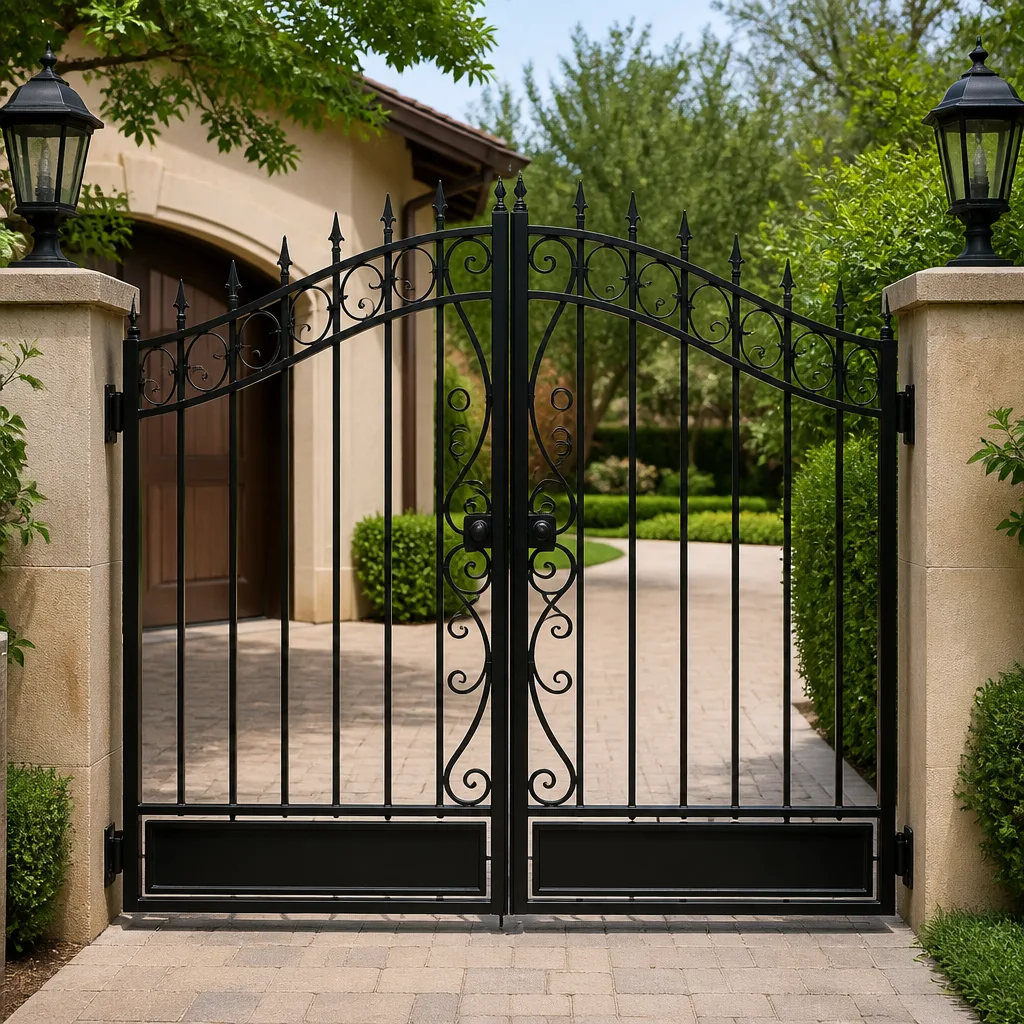
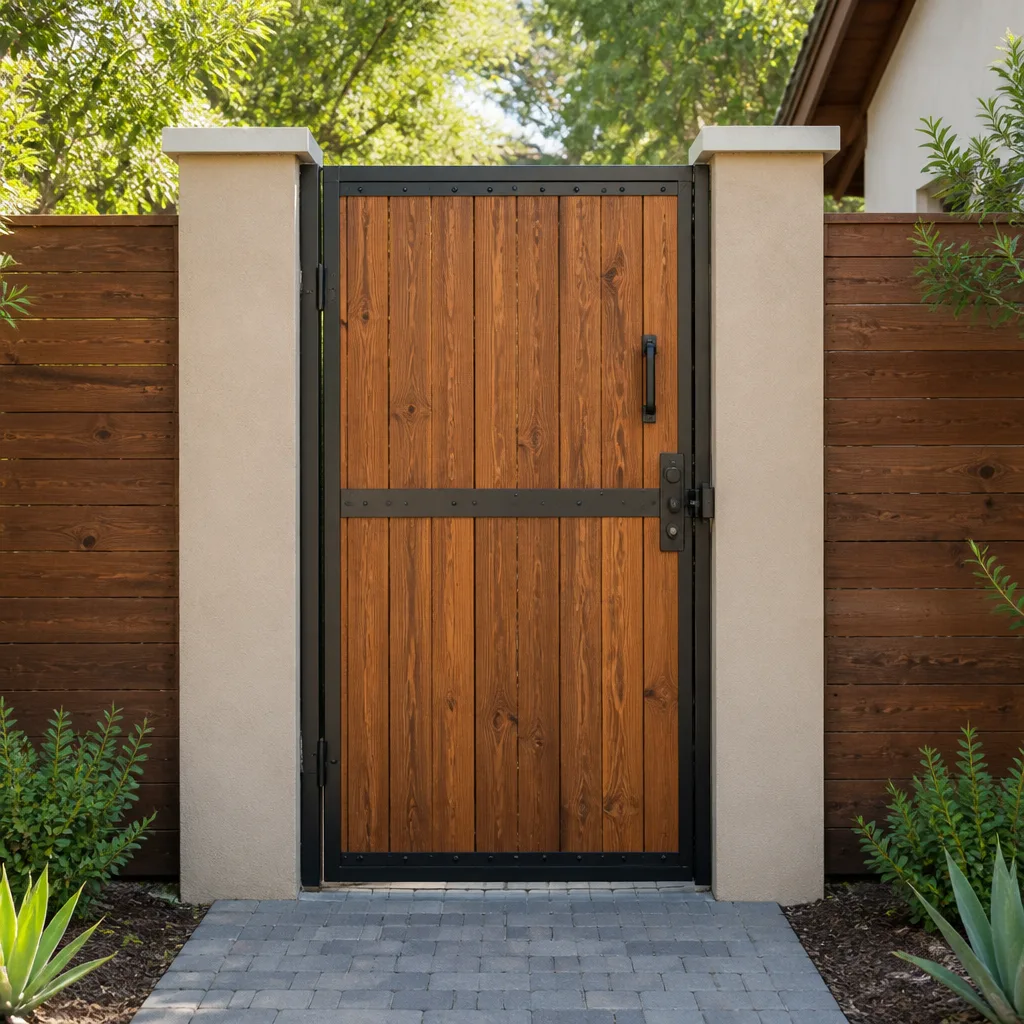
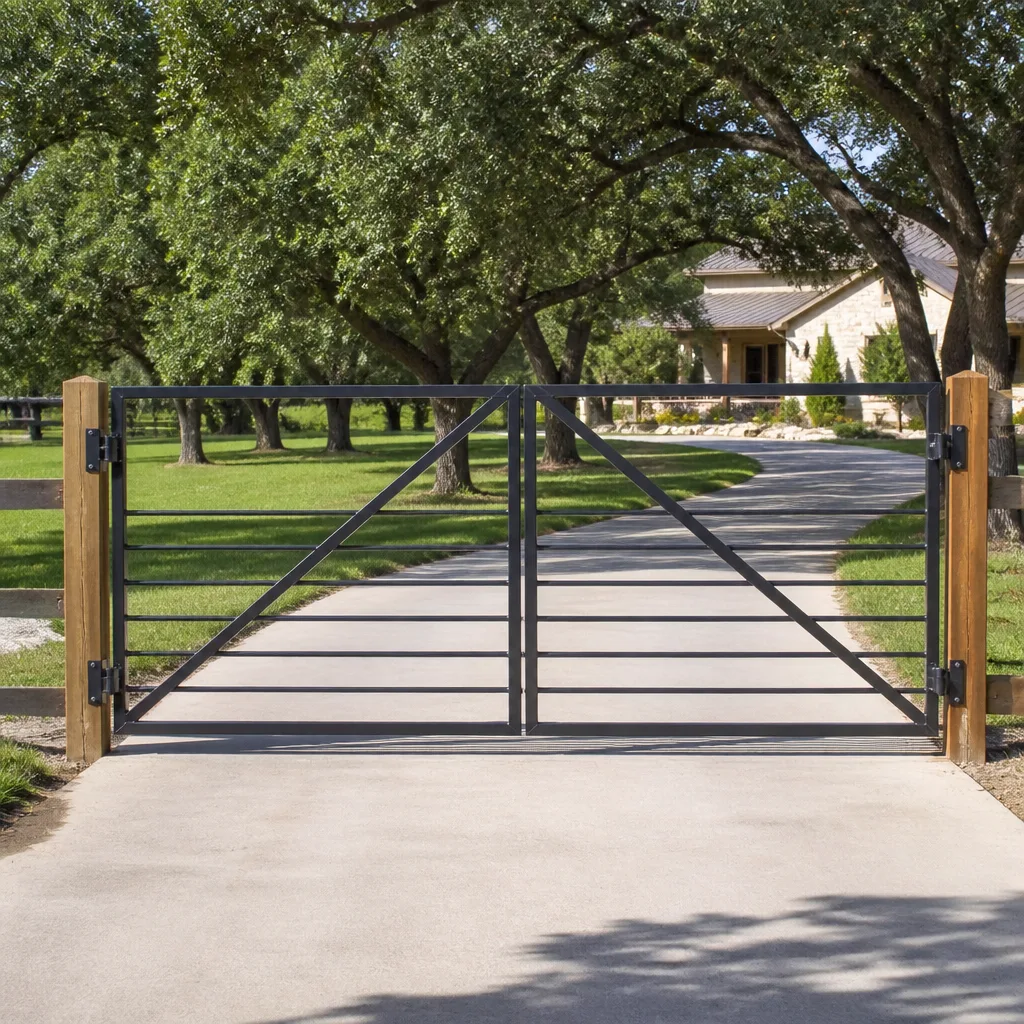
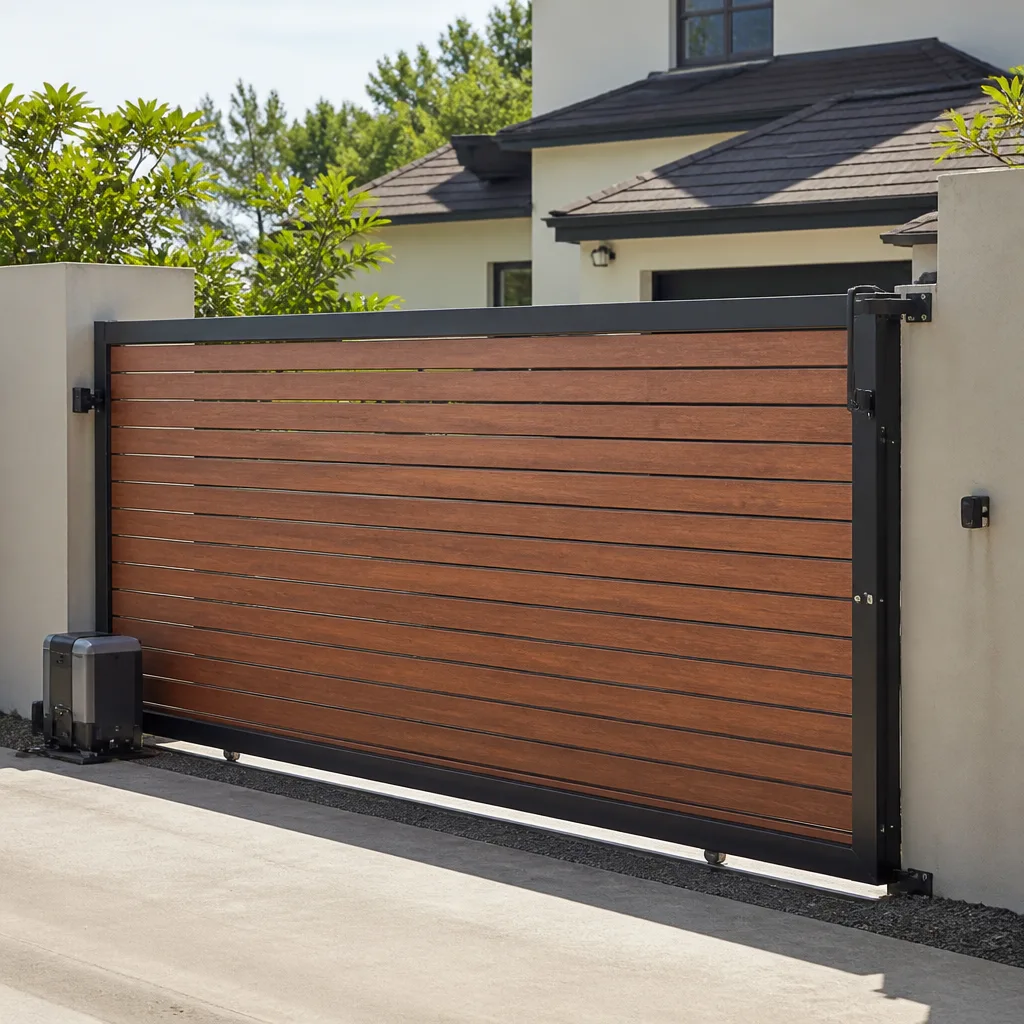
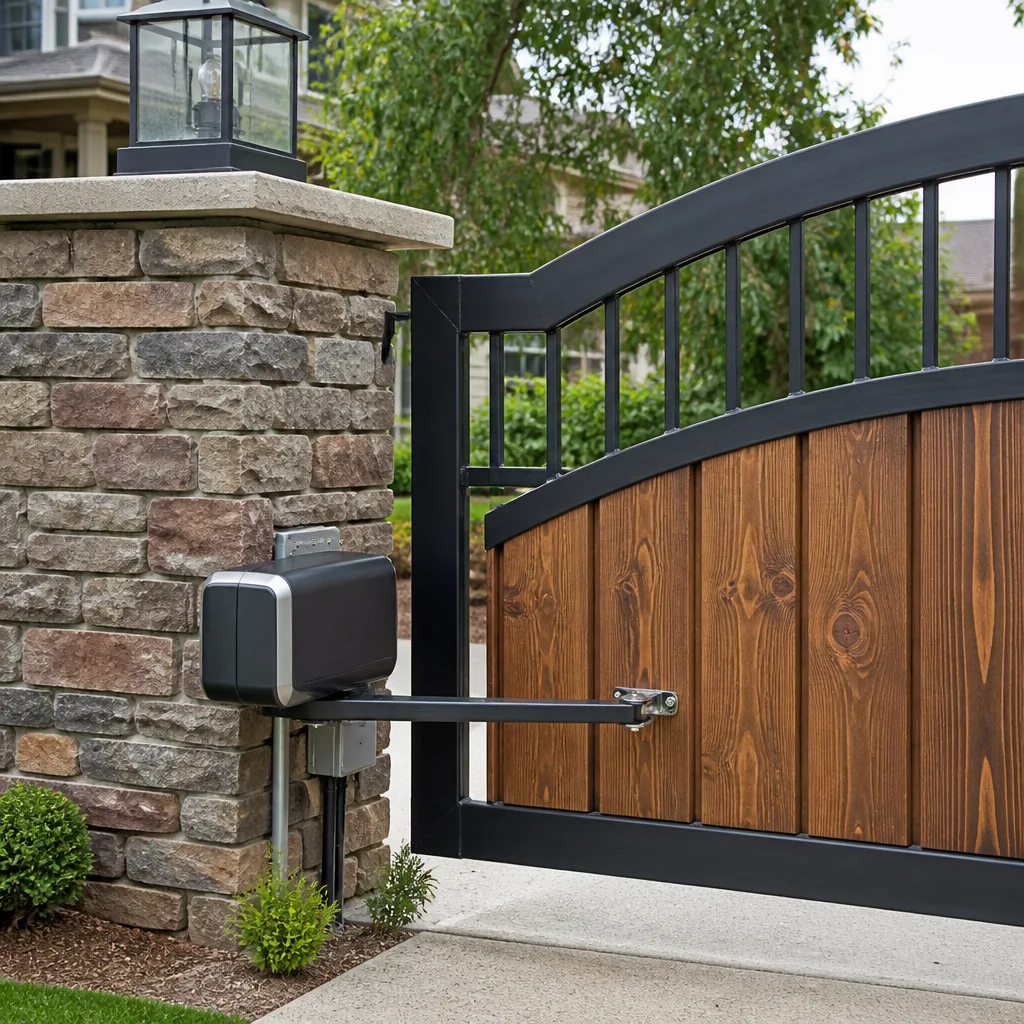
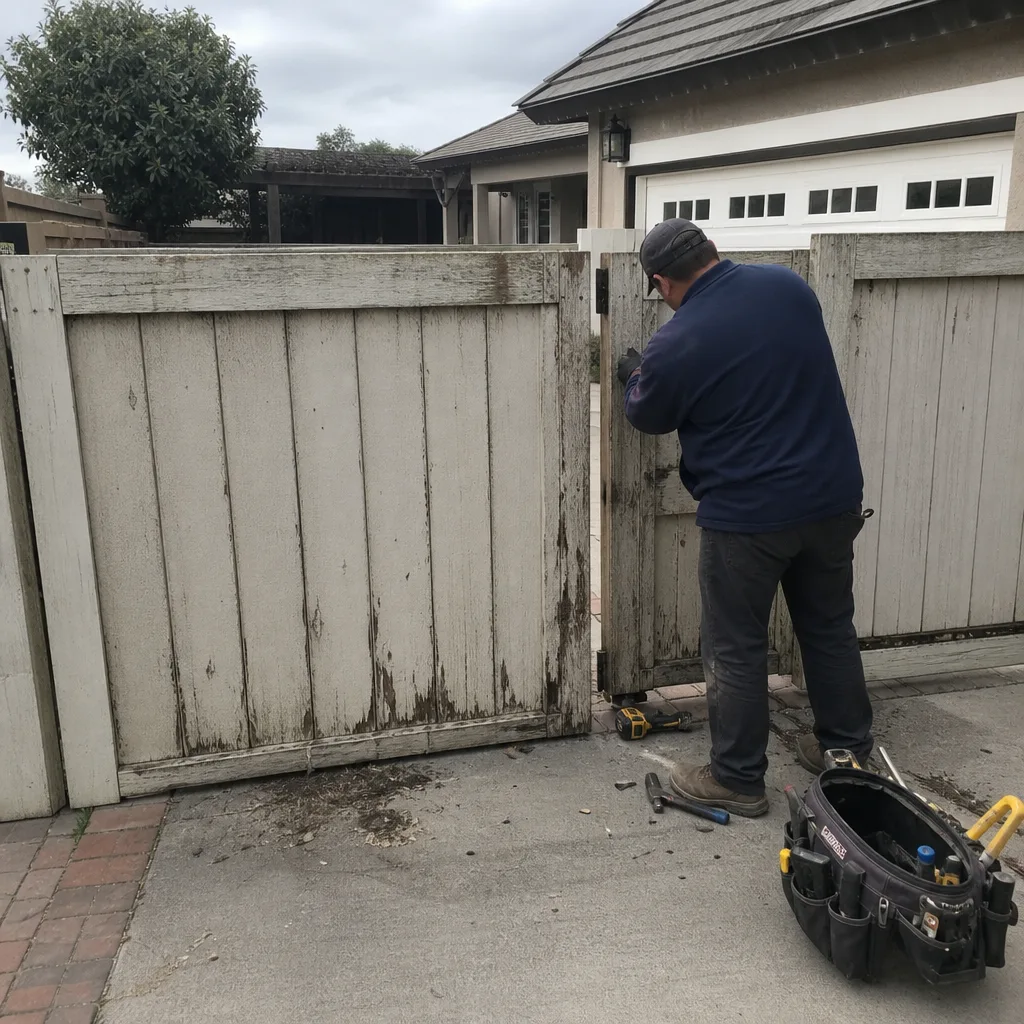 Before
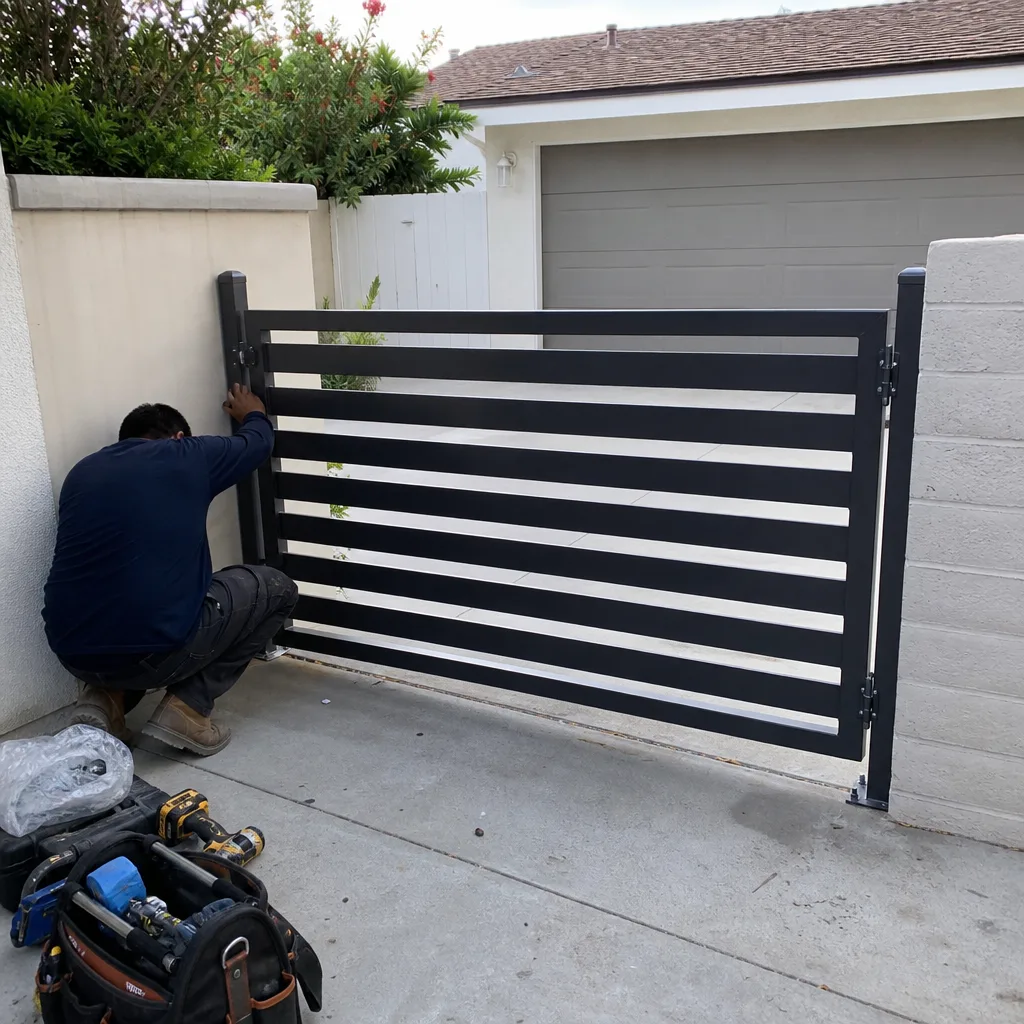 After
After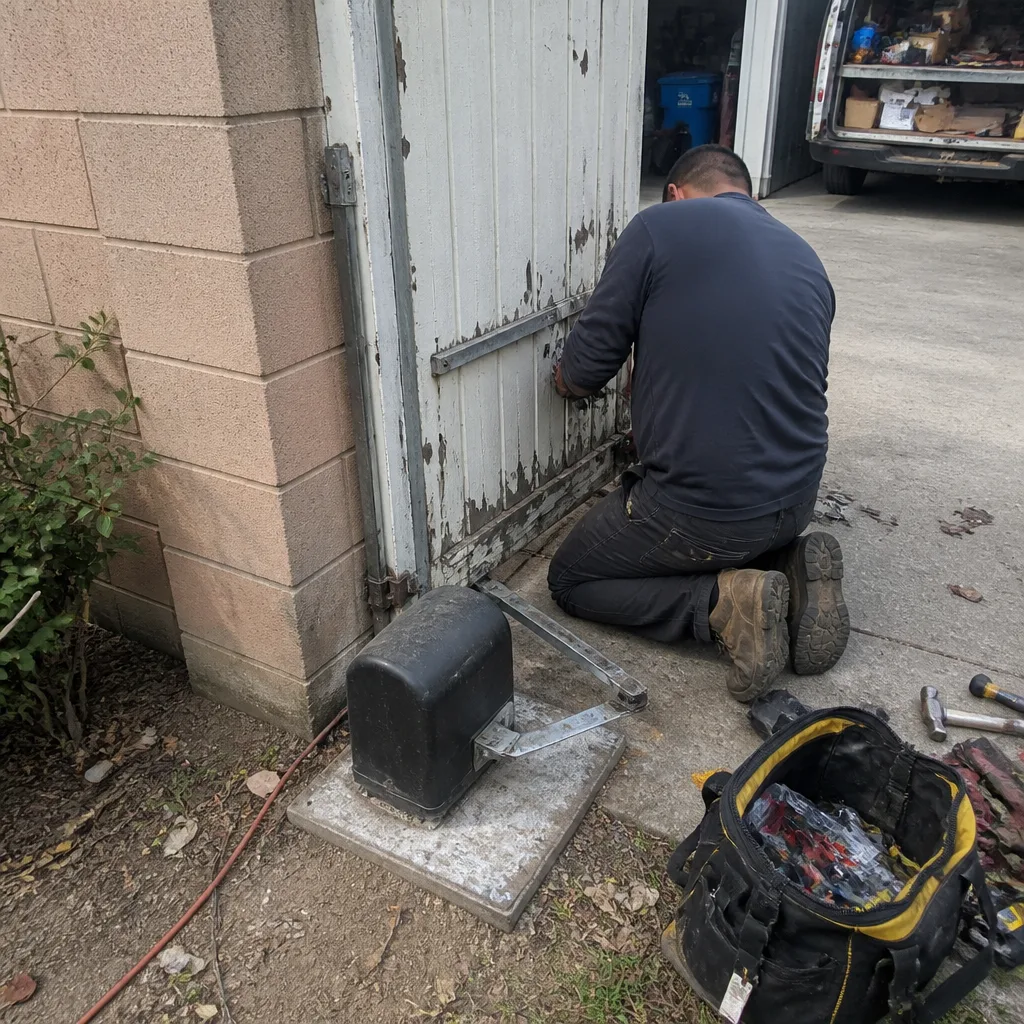 Before
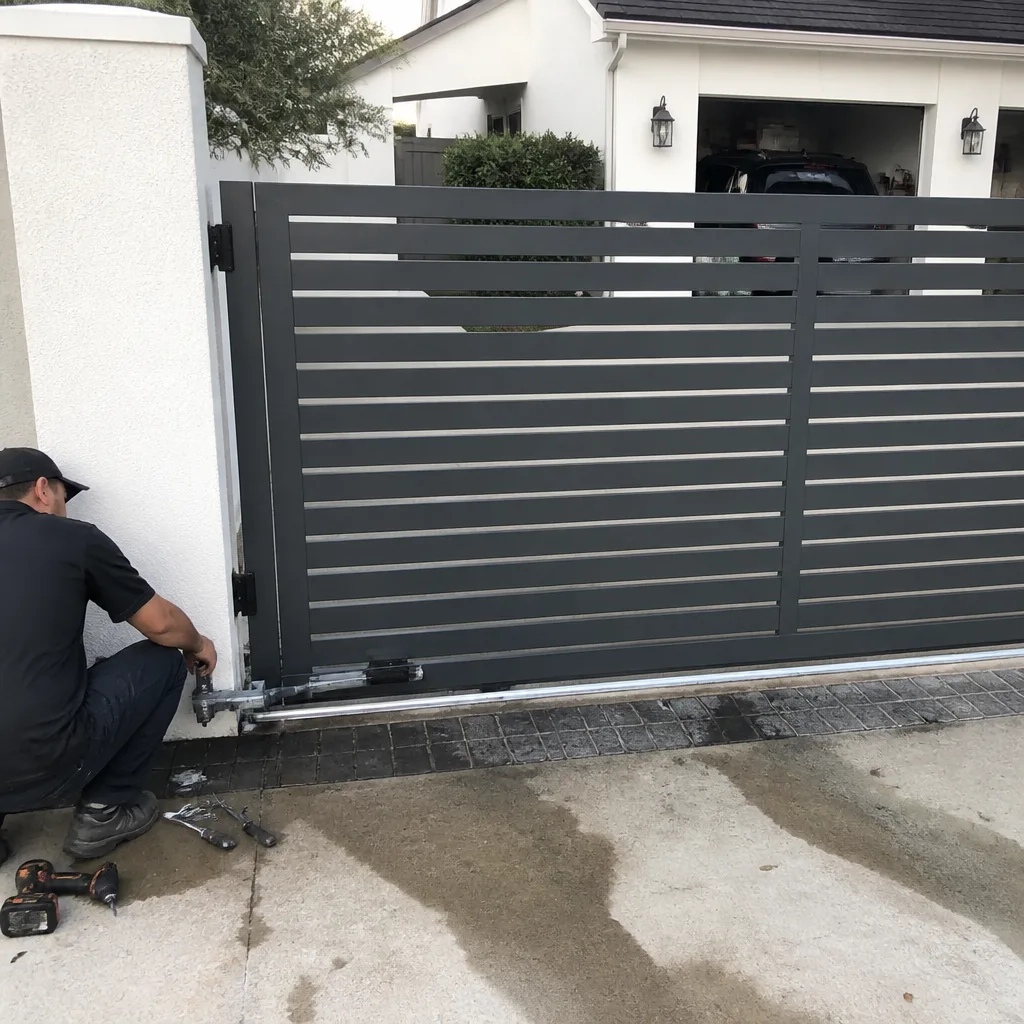 After
After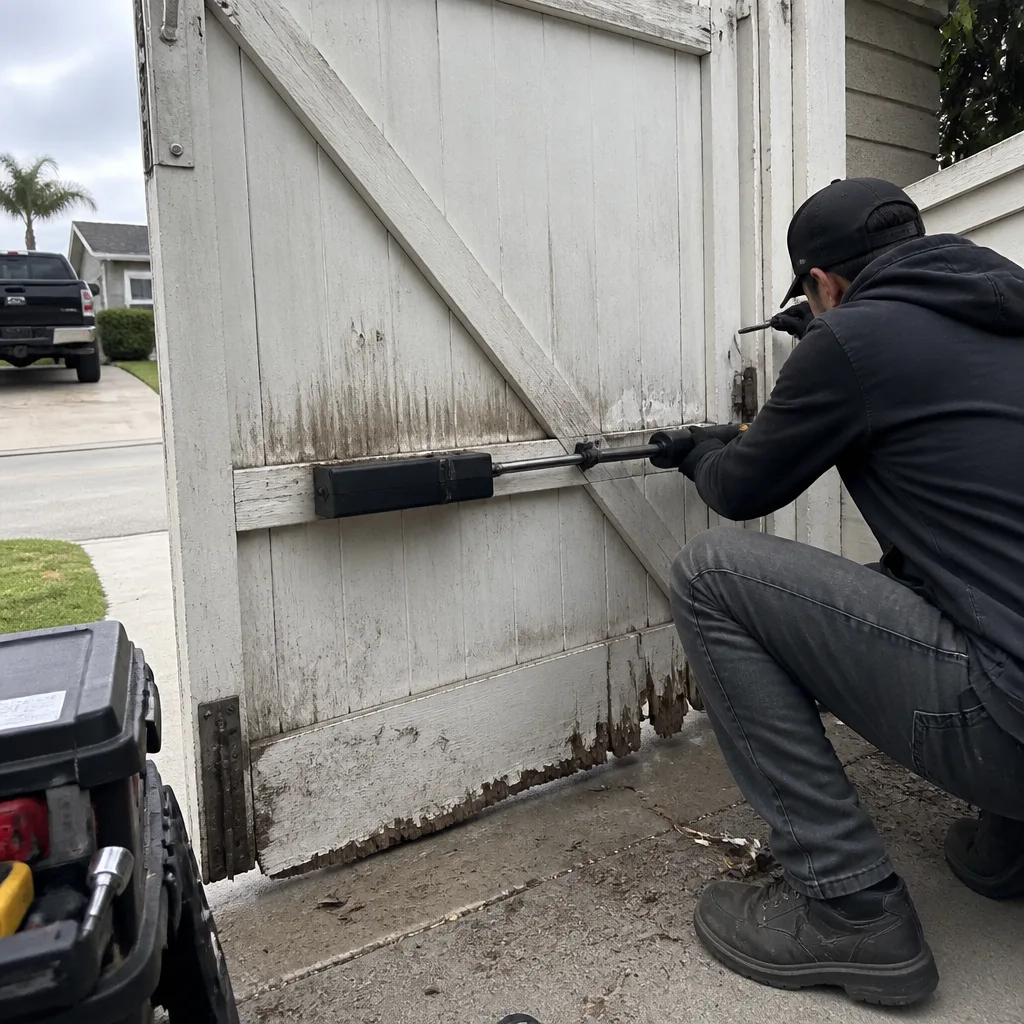 Before
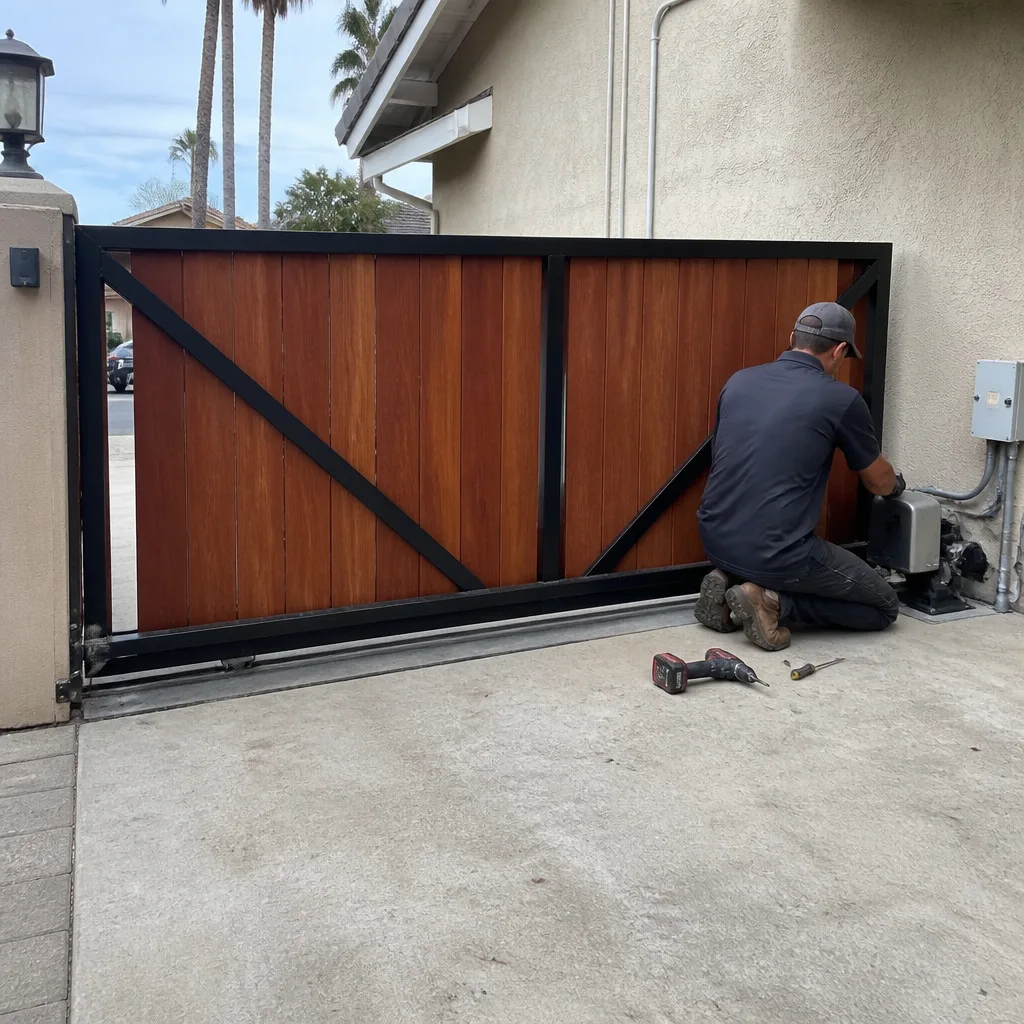 After
AfterGate Repair Maintenance Checklist for Huntington Beach Homeowners
Most gate failures in Huntington Beach don’t start with a dramatic snap. They start with a quarter-inch of salt crust building up on a hinge pin, unnoticed for eighteen months while the gate slowly sags against the post. By the time the motor burns out or the weld cracks, the repair costs three times what a $9 tube of grease and a fifteen-minute inspection would have prevented. This guide walks you through a plain-English maintenance checklist built for coastal air, damp mornings, and gates that work hard every single day. You’ll learn what to check monthly, what to leave alone entirely, what Huntington Beach’s salt air does to different gate materials, and when a phone call beats a socket wrench.
Quick Answer
A proper Huntington Beach gate maintenance routine comes down to a 10-minute monthly walkaround plus two deeper seasonal checks per year. You’re looking for hinge wear, rust at weld points, battery health on back-up systems, and anywhere salt air meets bare metal. Catch those issues early and most gates sail past twenty years. Miss them and you’re replacing an opener, re-welding a frame, or paying for a gate rebuild that proper grease and inspection would have prevented.
Table of Contents
- Why Huntington Beach Air Is Harder on Gates Than You’d Think
- The 10-Minute Monthly Gate Checklist
- Seasonal Maintenance: The Two Deeper Checks Per Year
- Salt Air, Rust, and Your Gate: What Actually Happens
- Opener and Automation Maintenance: The Part Most People Skip
- Hinges, Rollers, and Hardware: Where Gates Actually Fail
- Material-Specific Care: Wrought Iron, Steel, Aluminum, and Wood
- Common Mistakes to Avoid
- When to Call a Professional
- Frequently Asked Questions
Why Huntington Beach Air Is Harder on Gates Than You’d Think
Huntington Beach sits close enough to the Pacific that the morning marine layer does more than dampen the sidewalk. It carries microscopic salt particles inland, and those particles settle on every exposed metal surface on your property, including your gate. Salt accelerates oxidation dramatically. A steel gate that would develop surface rust in five years in Garden Grove will show rust bloom in two years within a mile of the coast, particularly on the ocean side of Beach Boulevard where the breeze is more consistent. The salt doesn’t need rain to do damage; it just needs moisture, and Huntington Beach delivers that every single night from May through July.
Beyond salt, the city’s particular geography means gates near the wetlands, around Bolsa Chica, or along the Santa Ana River see more condensation than gates in the flat inland neighborhoods near Five Points. Aluminum fares best, wrought iron sits somewhere in the middle, and powder-coated steel gates built without proper coastal prep start to fail earliest. The gate post that looked fine last June might show a rust line at the base by September, especially if your irrigation sprays anywhere near it. None of this is cause for alarm. It’s cause for a maintenance routine that acknowledges the environment instead of pretending the gate lives in Arizona.
The 10-Minute Monthly Gate Checklist
The gate you check every month is a gate that stays out of our repair queue. We’ve been doing this work across Huntington Beach since 2013, and the single pattern we see over and over is simple: homeowners who walk their gate monthly catch a $40 hinge issue before it becomes a $900 opener replacement. Here is the exact walkaround we recommend:
- Stand at the closed gate and look at the top line. A gate that sits level when closed is a gate with healthy hinges. If the free end droops a quarter-inch or more, the hinge pins or mounting bolts are wearing. Write it down.
- Open the gate fully and let go at mid-swing. It should continue smoothly, not lurch, squeal, or stop. Hesitation means friction, and friction means the motor is working harder than it should.
- Look at every hinge, roller, and pivot point with a flashlight. You’re looking for orange-brown discoloration, cracked paint at the joint, or a fine metallic dust that indicates metal grinding on metal.
- Check the gate track, if you have a slide gate. Huntington Beach’s sandy soil migrates. Leaves, sand, and landscaping debris collect in the track and stress the drive system. Clear it by hand, not with a hose that pushes grit deeper.
- Stand inside and verify the photo eyes or safety edges. Press the close button and wave your hand in front of each photo eye. The gate should reverse or stop before contacting your hand. If it doesn’t, stop using the automatic close until it’s checked.
- Listen to the opener. A smooth motor hum is expected. Grinding, clicking, or a rhythmic thump usually means the drive chain, belt, or gearbox needs attention before it strands you.
- Check the gate’s physical stops. In Huntington Beach’s older neighborhoods, gates installed in the 1990s often have stops that never get adjusted. The gate should stop against its positive stops, not against the motor’s limit switch. Motor-stopping causes premature wear on nine out of ten openers we service, including Linear, Viking, and DoorKing units.
- Inspect for new rust, especially at the bottom six inches. Salt spray kicks up from the ground wherever sprinklers run. If you see a rust drip line, mark it and plan to address it before winter.
Seasonal Maintenance: The Two Deeper Checks Per Year
Monthly checks catch wear. Seasonal checks prevent it. We recommend doing a deep maintenance pass twice a year in Huntington Beach: once in late spring, before the marine layer and beach traffic pick up, and once in late fall, before the winter storm season and salt-laden air settles in for good.
Spring Deep Check
- Lubricate every moving metal part. Use white lithium grease on hinge pins, roller bearings, and chain drive if you have one. Do not use WD-40 as a lubricant; it displaces moisture and then evaporates, leaving the metal drier than you started.
- Check and tighten every visible bolt and set screw. Thermal expansion and contraction across Huntington Beach’s daily temperature swings loosen hardware over time. A bolt on a Viking opener arm that’s backed out half a turn puts uneven load on the motor shaft.
- Test the battery backup, if installed. In Huntington Beach, power flickers during Santa Ana wind events and coastal storm fronts. A gate battery that’s older than three years often tests fine in spring and then fails the first time it’s actually needed. If it’s seven years old, plan to replace it.
- Wash the gate with mild soap and freshwater. Rinse salt residue off the entire frame, top to bottom. This is the single most effective anti-corrosion action a homeowner can take, and almost no one does it.
Fall Deep Check
- Inspect every weld point with a bright light. Hairline cracks at welds are where salt gets inside the metal’s protective coating. If you see a hairline line in the paint at a joint, tap the area gently with a screwdriver handle. Flaking or movement means have it looked at before winter moisture accelerates it.
- Test the manual release mechanism. Every automatic gate has one. You need to know how to open the gate if the power dies and who in the household can do it physically. We’ve had calls from Huntington Beach homeowners during winter outages who never tested theirs and found it seized after years of disuse.
- Check the keypad and access panel for corrosion at the connectors. Huntington Beach’s damp air wicks into any opening. Dielectric grease on low-voltage connections keeps a DoorKing or Ghost Controls keypad from intermittent failures that are maddening to diagnose after the fact.
- Review the gate’s alignments when closed. The gate should sit in the same position relative to the latch, lock, or magnetic lock it did six months ago. A gate that’s shifted a half-inch means a post is moving, and a moving post means a foundation issue, not a hardware issue.
Salt Air, Rust, and Your Gate: What Actually Happens
We’ve rebuilt gates in Huntington Beach that spent thirty years within sight of the water, and we’ve repaired gates that failed in four. The difference was never luck. It was coating integrity, maintenance, and the original material choice. Steel and wrought iron are ferrous metals; they contain iron, which oxidizes when exposed to oxygen and moisture. Salt accelerates the reaction by acting as an electrolyte. A scratch in the paint that stays dry for a decade in inland Orange County can bloom into a rust pocket in one winter near the coast.
Powder coating is the best defense available for metal gates, but only if the entire piece is coated uniformly and the coating remains intact. Once a chip exposes bare steel, the salt air goes to work and the rust travels under the remaining coating, delaminating it from the metal. This is why a gate can look fine along the top rail while the bottom four inches flake away, hidden by the shadow of a hedge. The bottom rail and lower pickets rust first because they sit closer to the saline soil and absorb splash from rain and irrigation.
For Huntington Beach homeowners, this means two things. First, touch up chips and scratches promptly with a quality metal primer and matching paint. Second, keep the bottom of the gate free of vegetation, leaf litter, and standing water. We regularly clear enough debris from around gate posts in the Huntington Harbor area to fill a five-gallon bucket, and all of it holds moisture against the metal for weeks at a time.
Opener and Automation Maintenance: The Part Most People Skip
The mechanical gate can be rusty and worn and still struggle along for another year. The automation cannot. An opener that’s working harder than it should burns through gears, capacitors, limit switches, and control boards, and those parts fail without warning. In our experience across Huntington Beach, the most common avoidable opener repair is a burned motor or stripped gear caused by a gate that was never lubricated and then gradually increased in resistance until the opener couldn’t move it anymore.
Your opener maintenance routine doesn’t require electrical knowledge. It requires attention:
- Listen for changes. An opener’s sound is consistent when it’s healthy. A new clicking noise, a deeper hum, or a longer run time than the gate used to take are all early indicators of a problem.
- Watch the gate’s speed. If the gate creeps slower than it did last season, the issue is mechanical resistance, not the motor’s mood. Address the friction before the motor cooks itself.
- Check control settings once a year. Force adjustments, closing speed, and auto-close timers should be set so the gate closes with enough force to move itself and nothing more. A gate set to maximum force because of a rusted roller is a gate waiting to hurt someone or shear a gear.
- Keep the opener housing clean and dry. In Huntington Beach, opener housings collect fine salt dust and spiderwebs. A dry brush and a can of compressed air twice a year prevents connections from corroding.
We service nine major gate-automation brands including Linear, Viking, Ghost Controls, and DoorKing, and the failure pattern across all of them is the same: the ones maintained per the checklist last; the ones run until they break do not. If your opener is over ten years old and you’ve never had it checked, starting with a seasonal inspection is the single highest-value maintenance step available to you.
Hinges, Rollers, and Hardware: Where Gates Actually Fail
The heaviest single structural load on any gate is at its hinge line. On a cantilever slide gate, it’s the roller trucks and guide rollers. On a swing gate, it’s the hinge pins and the post mounting plates. These are the points where a one-degree sag multiplies into a gate that drags, then grinds, then stops moving entirely. Most of the gate repairs we complete in Huntington Beach begin with a hardware issue that was visible for months before the opener died.
Hinge pins should sit fully engaged in their barrels. If a pin has walked up out of the hinge by a quarter-inch or more, the gate has been working itself apart. Tapping it back down can buy time on some hinges, but on welded barrel hinges with worn pins, the proper repair is replacement of the pin, not a band-aid. Roller bearings should roll, not slide. A roller that’s frozen skids on the track and machines a flat spot onto its face. Once the roller flat-spots, the gate jars each time that roller passes, hammering the drive system. Mounting bolts should be torqued, not just snug. Every gate we hang, we torque to spec, and we still recommend checking the bolts at least twice a year. Steel expands and contracts. Bolts that were tight last year are not automatically tight now.
If your gate is heavy, as many Huntington Beach driveway gates from the 1980s and 1990s are, hardware wear accelerates. Those gates were often built with thicker steel than modern replacements, which is excellent for durability but terrible for the hinges if the pins rust or wear. Listen for the dry creak on opening. That sound is the hinge telling you it’s working against friction, and the motor is paying for it.
Material-Specific Care: Wrought Iron, Steel, Aluminum, and Wood
Different gates need different care, and Huntington Beach’s climate treats each material differently. What’s correct for an aluminum gate in Huntington Harbour is not what you’d do for a custom steel gate in Seacliff.
Wrought Iron and Steel
Hand-forged or welded steel gates are the most beautiful gates in town and the most rust-prone. They need the most attentive maintenance. Wash them twice a year, touch up chips immediately, keep the bottom clear of moisture-holding debris, and inspect welds at the joints. Steel that’s well-maintained will last indefinitely. Steel that’s ignored near the coast will not make twenty years without structural repair.
Aluminum
Aluminum doesn’t rust, which makes it popular near the beach, but it corrodes differently. Aluminum oxide is a dull white powder that forms at joints and where aluminum contacts steel hardware. The junction between an aluminum gate and steel hinges or steel bolts is a galvanic corrosion point; salt water bridging the two metals creates a battery effect. Inspect those contact points monthly, and if you see white powder, clean it off and consider nylon washers or anti-seize compound at the joints.
Wood
Wooden gates are less common in Huntington Beach than they were thirty years ago, but they still exist on older properties throughout the Bolsa Chica and Eader neighborhoods. Wood moves with moisture; it swells in damp marine air and shrinks in dry Santa Ana conditions. Check the screws at the hinges and the diagonal bracing monthly during the damp season. A wooden gate that gets too heavy from moisture absorption can strain an opener, especially if the wood has started to soak up water at the bottom edge.
Common Mistakes to Avoid
- Using the wrong lubricant. WD-40, penetrating oil, and general-purpose sprays are not gate lubricants. They strip existing grease and leave metal dry. Use white lithium grease for hinge pins and rollers, and dry silicone spray for slides and tracks. A gate that’s properly greased in Huntington Beach should stay lubricated for months, not weeks.
- Ignoring sag for months. A sagging gate is failing. It will not correct itself, and the longer it sags, the more expensive the repair. A sag caught early is usually a hinge adjustment or a turnbuckle on the frame. A sag caught late is a snapped post or a burned-out opener.
- Running the opener after the gate starts binding. When the gate is fighting the motor, the motor loses every time. If you hear a harder sound, if the gate is noticeably slower, or if it reverses unexpectedly, stop using it and get it looked at before the next cycle.
- Forgetting the manual release. The day you need the manual release is never a convenient day. If the power fails in a storm and the gate is the only way your car gets in or out, a seized release mechanism turns an inconvenience into a real problem. Test it during both seasonal checks.
- Painting over rust. Rust never sleeps. Paint over rust and it continues spreading under the new paint, popping the coating off in a year. Wire-brush the rust down to bare metal, apply primer, then paint. Or leave it to a professional who will do the same and make it last.
- Ignoring the gate stops. We see gates in Huntington Beach that have been closing against the motor’s limit switch for years because the physical stop was never adjusted or was removed during a previous repair. The motor should never be the stop; the gate should rest on its positive stops.
- Treating a temporary fix as permanent. Zip ties on a photo eye mount, a bent bracket that’s “good enough,” a roller that’s been greased back to life three times: these are temporary. They’re fine until the day they fail while the gate is closing on someone. Replace worn parts, don’t extend their life indefinitely.
When to Call a Professional
Some maintenance is homeowner work. Some is not. If your gate has cracked welds, a post that’s moving, a drive chain that’s snapped, or an opener that’s making mechanical noise instead of a smooth hum, those are professional repairs. If the gate is a heavyweight steel gate and the hinge pins are worn, replacing those pins correctly requires supporting the gate’s full weight safely; that’s specialist work, not a weekend job. If any electrical component beyond a photo-eye alignment is involved, and you’re not confident you understand what you’re looking at, the right move is to stop and call. High-tension springs, gate motors, and heavy steel panels can cause serious injury when they fail or when they’re worked on incorrectly. Ironworks Gate Co. offers free estimates in Huntington Beach - call (424) 999-7545. We’ll tell you exactly what the gate needs, what we recommend, and what it costs before any work begins.
Frequently Asked Questions
Basic gate repairs in Huntington Beach typically cost between $150 and $450 for tasks like hinge replacement, roller replacement, or limit-switch adjustment. More involved work, like replacing an opener motor, rebuilding a weld joint, or fixing a gate that’s sagging from a post issue, is typically $500 to $1,500 depending on materials and access. Every job we do is quoted and agreed to in writing before any work starts, and the price you see is the price you pay. Call (424) 999-7545 for an exact quote on your gate; estimates are free.
In most cases, yes. We keep service appointments open for same-day and next-day repair calls in Huntington Beach and the surrounding beach cities, and someone at Ironworks Gate Co. answers the phone live 24 hours a day, seven days a week. Call our standard line at (424) 999-7545 and we’ll let you know exactly when a technician can be at your home. Most repair jobs are completed in a single visit.
A full gate installation includes removing the existing gate or preparing the new opening, setting or resetting posts, hanging the gate, installing or migrating any automation equipment, running power and low-voltage wiring as needed, setting limit switches and safety edges, and testing the full system through multiple cycles before we leave. When installs require a new gate operator, we’ll talk through brand and model options ahead of time, including Linear, Viking, Ghost Controls, and DoorKing, and we’ll settle the price before a single bolt is turned. There are no surprises on the bill, and every job is covered by our 90-Day Done Right Promise.
Yes. We handle low-voltage and line-voltage power runs, photo-eye installation and alignment, safety-edge retrofits, and all the control wiring for automatic gates. That includes rewiring older Huntington Beach gates that were installed before current safety standards and upgrading them so the gate stops and reverses the way it should. Ask about our free second opinion if you’ve received a written estimate from another company and want a straight comparison.
For a residential gate in Huntington Beach, we recommend a $89 seasonal tune-up twice a year, once in late spring and once in late fall. Coastal salt air and damp mornings are hard on metal, and a tune-up every six months catches wear before it becomes repair. Homeowners who follow this schedule get dramatically more life from their gates and openers than those who wait for something to break.
Yes. We currently offer $50 off any repair over $250, a free second opinion on any written estimate, an $89 seasonal tune-up, and a permanent 5% discount for seniors and veterans. The free estimate is always free, and the price is always agreed in writing before work starts. Call (424) 999-7545 and tell us what the gate is doing; we’ll walk you through the rest.
The Bottom Line
A Huntington Beach gate that’s inspected monthly and tuned up twice a year will run reliably for decades. A gate that’s ignored until it fails will strand you at the worst possible moment and cost multiples of what maintenance would have. The checklist is simple: look, listen, lubricate, and clean. Check the hinges, the hardware, the bottom rail, the opener sound, and the safety features. Address rust when it starts, not when it’s structural. And when something’s beyond homeowner work, call someone who does gates full time. We’ve served Huntington Beach for over 42 years, answer the phone 24/7, and stand behind every job in writing. If you’re not sure what your gate needs, call Ironworks Gate Co. at (424) 999-7545 for a free estimate and a straight answer from a technician who works on gates every day. Visit our Ironworks Gate Co. home page to see the full scope of what we do.
Written by Victor Salinas, Owner at Ironworks Gate Co., serving Huntington Beach since 2013.