
Last updated August 25, 2026
Free on-site gate assessment - hinges, posts, and your LiftMaster or Nice gate operator checked before anything is quoted
The assessment is free and the quote is the invoice.
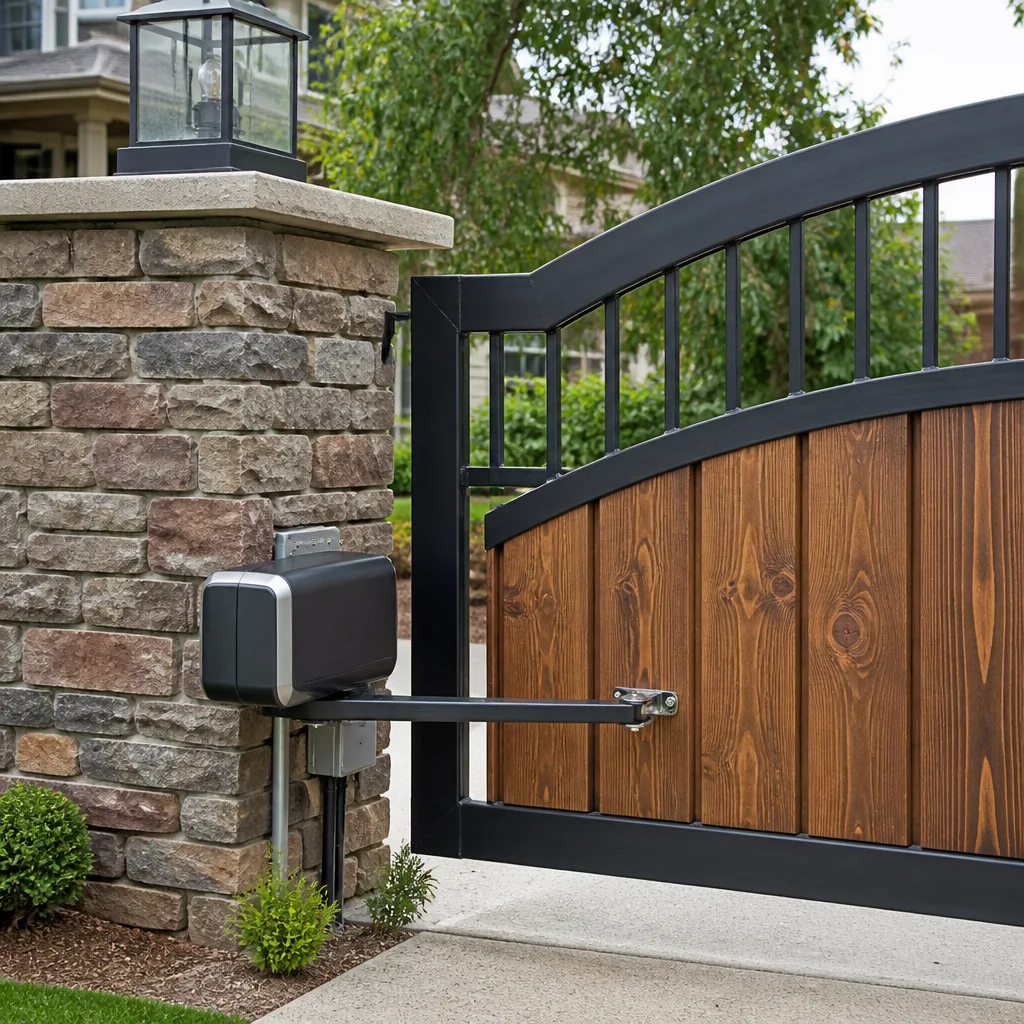
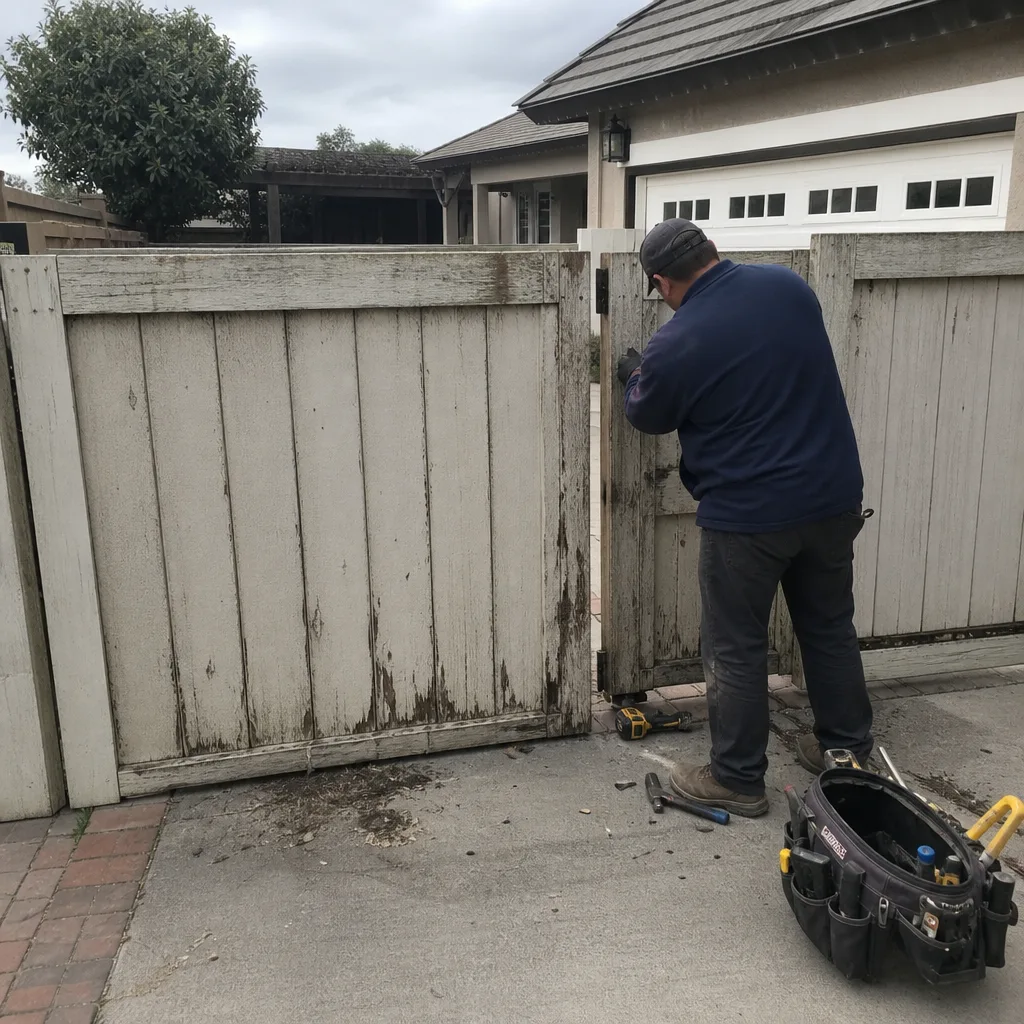 Before
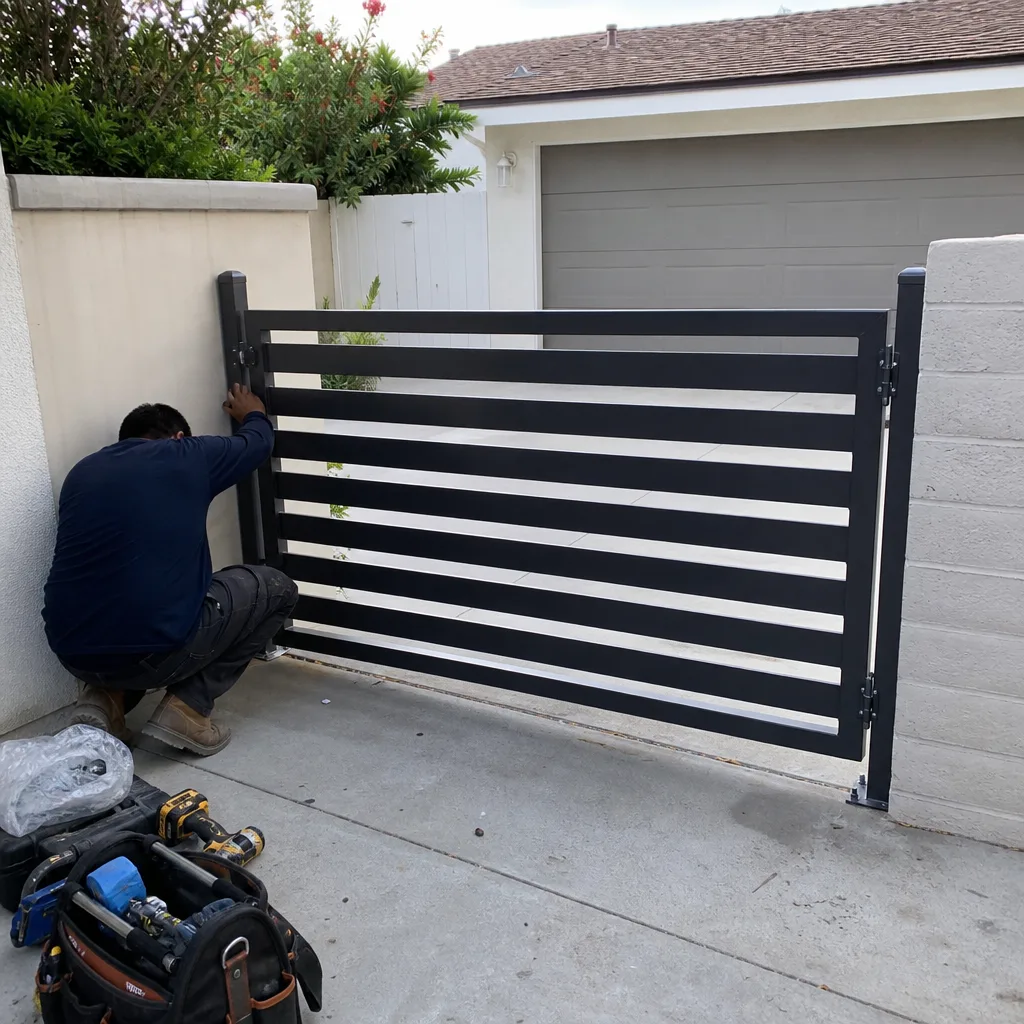 After
After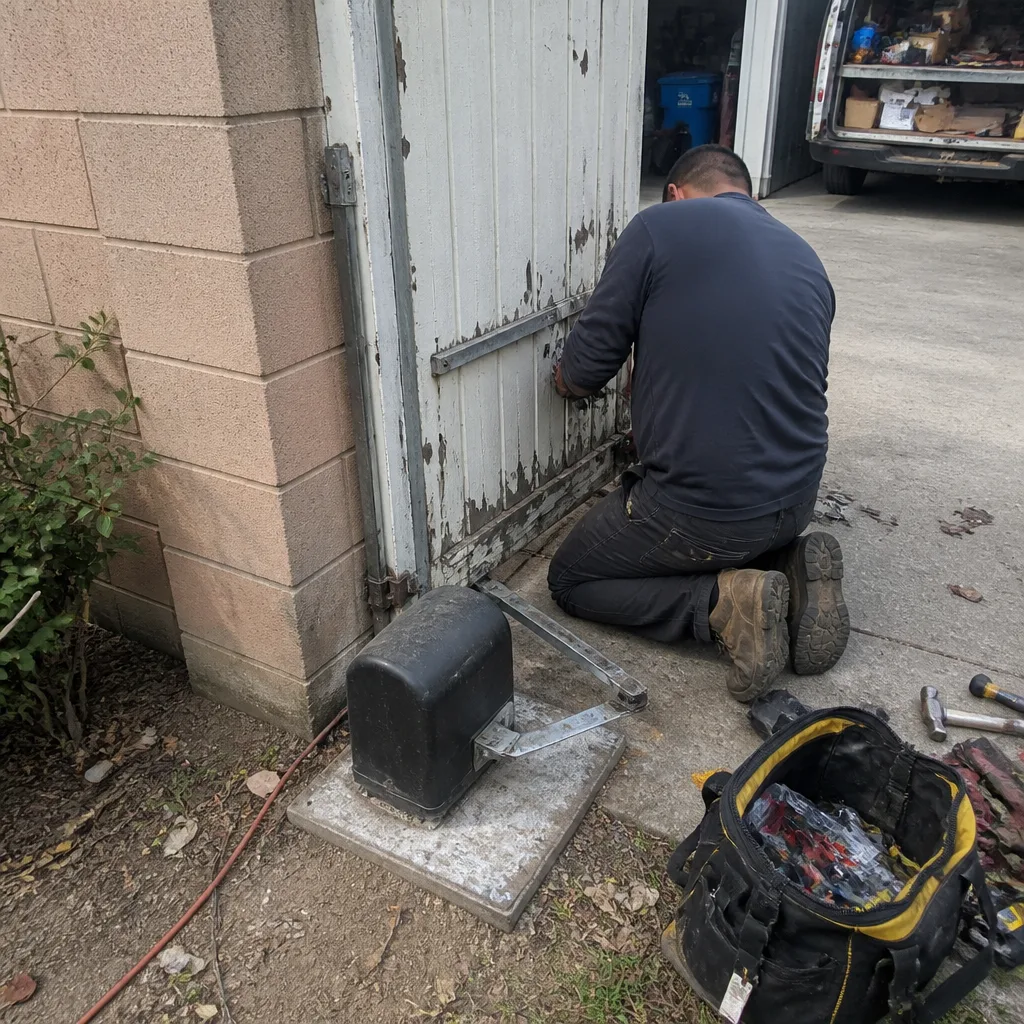 Before
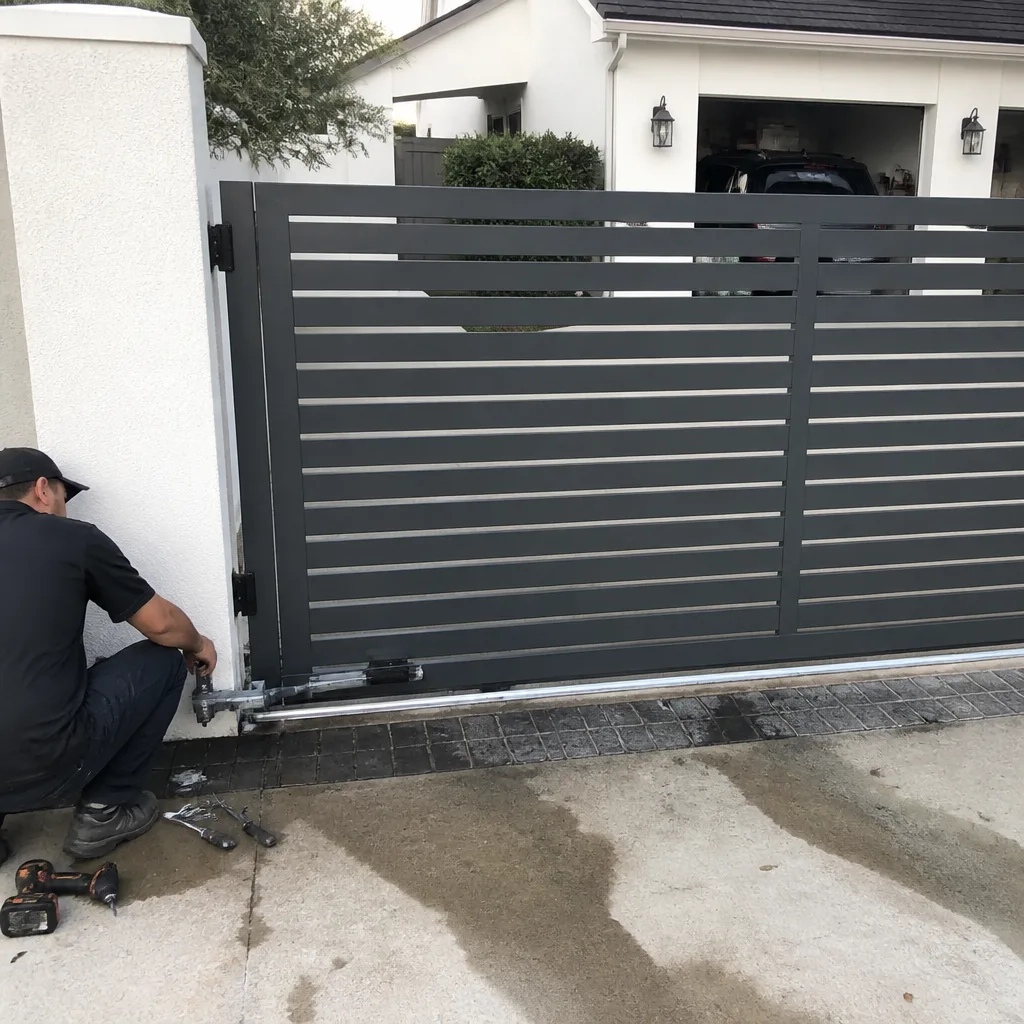 After
After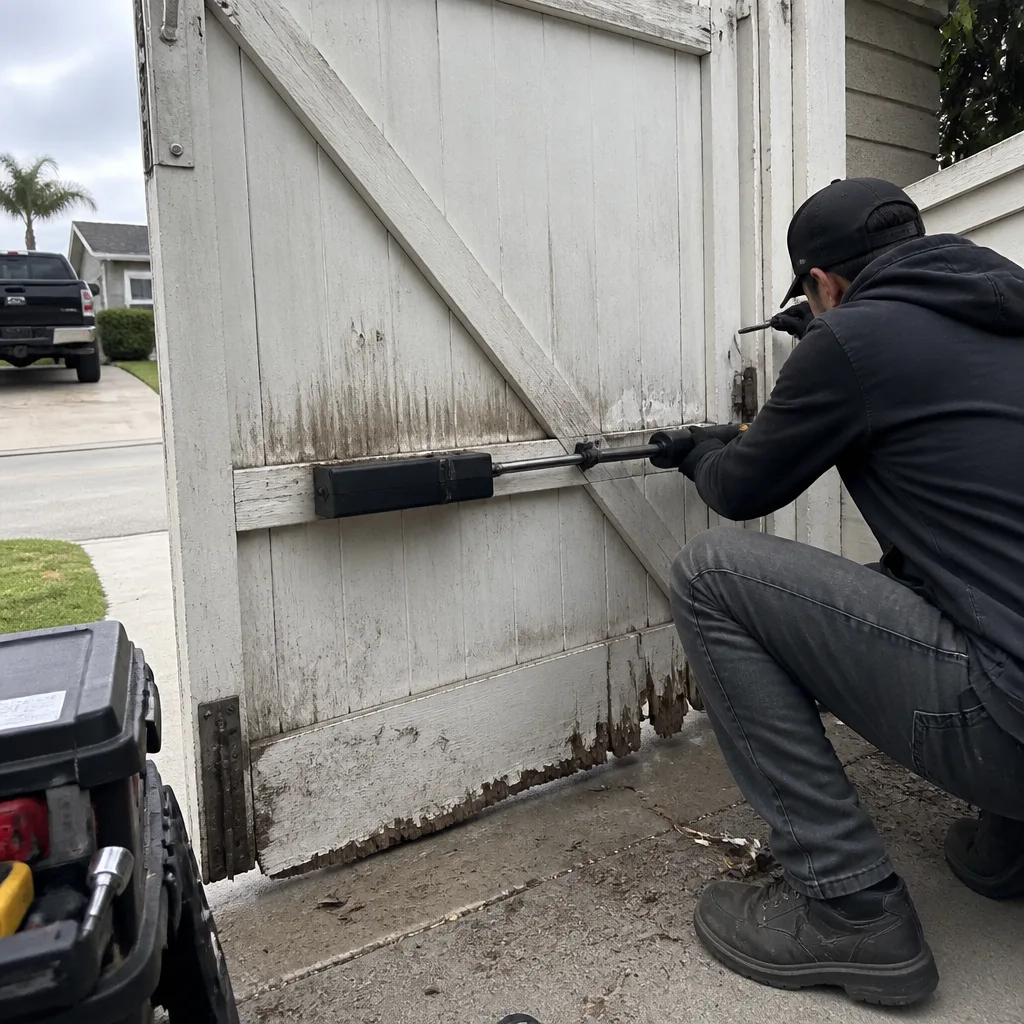 Before
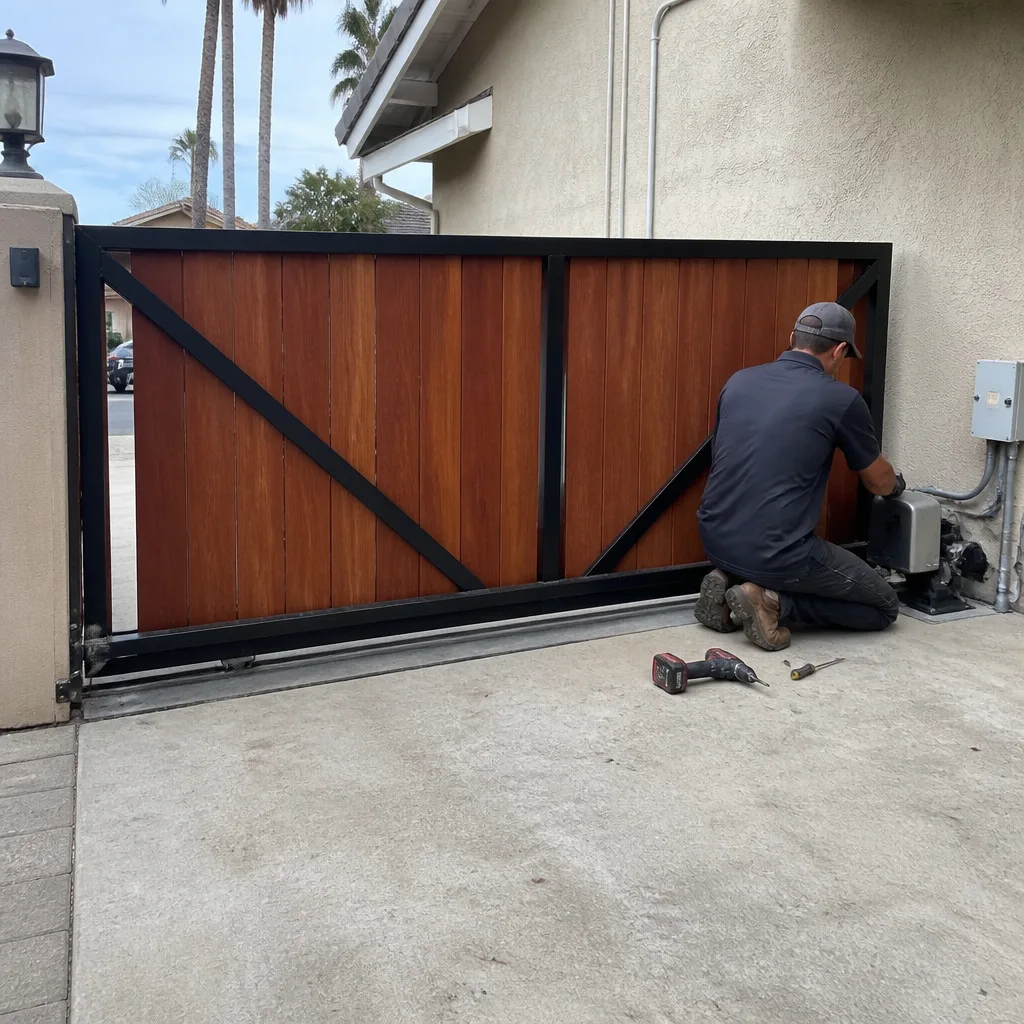 After
AfterGate Repair Warning Signs: A Huntington Beach Homeowner’s Reference Guide
Most driveway gates in Huntington Beach don’t fail all at once. They fail in small increments over months, sometimes years, and the homeowner notices only when a hinge finally cracks or a motor burns out on a Sunday morning with the gate stuck half open. Salt air is the quiet accomplice here. Huntington Beach sits close enough to the Pacific that the marine layer works on bare steel and exposed wiring year round, so a gate that looks merely weathered may already be losing structural integrity at the welds. This guide walks through the warning signs we have learned to recognize after decades of gate work along the Orange County coast, what each sign means, roughly what it costs to fix, and when a repair is no longer worth doing. You will finish with a working knowledge of your gate, enough to know whether to adjust, repair, or replace it.
Quick Answer
The clearest early warning signs of a failing gate in Huntington Beach are: the gate sags toward the latch side when open, it moves slower than it did a year ago, the motor hums or strains on startup, rust blooms around hinges or weld points, or the gate jerks or reverses mid travel. Any one of these is worth a service call. Two or more usually means a component has already failed and the gate is compensating for it, which shortens the life of every other part. In our experience, catching a sag at the first quarter-inch of drop usually saves a Huntington Beach homeowner $400 to $900 versus waiting until the hinge rips off the post.
Table of Contents
- Warning Sign 1: The Gate Sags or Drags on the Ground
- Warning Sign 2: The Gate Moves Slower Than It Used To
- Warning Sign 3: The Motor Hums, Clicks, or Strains
- Warning Sign 4: Rust at Hinges, Welds, and the Gate’s Bottom Rail
- Warning Sign 5: The Gate Reverses, Jerks, or Stops Mid Travel
- Warning Sign 6: The Gate Won’t Stay Open or Latch Securely
- Warning Sign 7: The Opener Works, but the Gate Doesn’t Move
- Common Mistakes to Avoid
- When to Call a Professional
- Frequently Asked Questions
Warning Sign 1: The Gate Sags or Drags on the Ground
A gate that scrapes the driveway as it opens is not just noisy. It is putting constant lateral load on the hinge barrels, and in Huntington Beach, where many older homes still have original steel gates hung in the 1990s or earlier, that load is often the last straw for a hinge that has already been thinned by salt corrosion. The most common cause is a worn or undersized hinge, though a failing weld where the hinge plate meets the post produces the same droop. A secondary cause is post lean: a gate post set in soil that shrinks and swells with Huntington Beach’s wet winters and dry summers can shift a half inch or more, pulling the gate out of square.
What to look for:
- A visible gap at the top hinge that closes when you lift the latch end of the gate.
- Scrape marks on the concrete or pavers in the gate’s swing path.
- A gate that needs a firm lift to close, when it used to close with one hand.
- Loose lag bolts at the hinge side, or rust staining below the bolt heads.
On a wood gate, sag often comes from the frame itself loosening at the corners. On a steel or aluminum gate, the problem is almost always the hinge. The repair is measured in hundreds, not thousands: a proper hinge replacement with a heavier barrel, or re-welding the hinge plate and gusseting the post, restores the gate’s swing and takes the strain off the motor. Left alone, a sagging gate destroys the hinge, then the post, then the opener gearbox, and a $300 repair becomes a $2,400 replacement. If you want to confirm the diagnosis without touching anything, call us and describe what the gate does, and we will tell you straight whether it sounds like a hinge or something deeper.
Warning Sign 2: The Gate Moves Slower Than It Used To
Gate openers move at a set speed. They are engineered that way, and when a gate that used to swing open in about fifteen seconds starts taking twenty or twenty-five, something is working against the motor. Sometimes the cause is mechanical: a hinge getting stiff, a wheel dragging, a rack and pinion going dry. Sometimes it is electrical: a capacitor losing its charge, a battery running down, a transformer putting out less than full voltage. On Huntington Beach properties where the gate faces west and takes direct afternoon sun, UV degradation of wiring insulation is common, and the first symptom is often a motor that bogs down as the day heats up.
Slow movement is a warning sign precisely because it is easy to ignore. The gate still opens. It still closes. But the motor is working harder than it was designed to, and that means heat. Heat breaks down motor windings and controller boards. By the time the gate stops moving altogether, the opener is frequently beyond economical repair.
The most useful questions to ask:
- Is the gate slow at all times of day, or only at certain times? A gate slow only in the morning often points to moisture or cold wiring; a gate slow in the afternoon points to heat or voltage drop.
- Does the gate slow down at the same point in its travel every time? That points to a mechanical bind at that specific spot, usually a hinge or a wheel.
- Does the motor sound different than it did six months ago? A lower, labored hum is the motor asking for help.
On any of the nine opener brands we service, including Linear and Viking systems common in Huntington Beach’s older subdivisions, sluggish movement is almost always repairable if addressed early. A mechanical bind gets corrected, a capacitor gets replaced, and the gate returns to its designed speed. Wait until total failure, and the cost moves from a parts-and-labor repair to a full opener replacement.
Warning Sign 3: The Motor Hums, Clicks, or Strains
Motors should be nearly silent from a few feet away. A low hum at rest is fine; a strained hum under load, a click before movement begins, or a grinding sound from the gear area is a motor telling you it is failing. The click before startup is often a capacitor struggling, or a relay on the control board arcing. The hum without movement is the classic sound of a seized gear or a jammed worm drive, and it is a failure in progress, not a warning of one.
Huntington Beach’s coastal moisture accelerates electrical problems that inland homeowners might never see. Salt-laden air corrodes control board terminals and solder joints. A board that looks fine on the outside can have green corrosion creeping along its traces, and the first audible clue is sometimes an intermittent click when the gate is commanded to move but doesn’t.
If the motor hums but nothing moves, do not keep pressing the remote or the keypad. Each attempt sends full current through a stalled motor, and a stalled motor becomes a burned-out motor within seconds. Cut power to the opener at its dedicated breaker or the opener’s own power switch, and leave it off until a technician can look at it. On gates with Ghost Controls or DoorKing openers, which are popular in Huntington Beach for their solar compatibility, a stalled motor can also damage the controller board if left powered, so powering down protects the brain as well as the muscle.
Most motor and board replacements are straightforward single-visit repairs, and we quote the price before any work begins. The repair that gets expensive is the one where the homeowner kept pressing the button for a week.
Warning Sign 4: Rust at Hinges, Welds, and the Gate’s Bottom Rail
Huntington Beach sits in one of the more corrosive environments for steel in Southern California. The marine layer arrives most mornings and leaves a fine salt film on any bare or undercoated metal. A gate with a factory powder coat holds up well. A gate that has been scratched by a car bumper, or welded and then painted without proper surface prep, starts rusting within a season. The rust matters in three specific places.
Hinges: rust on a hinge barrel expands as it forms, effectively tightening the hinge. That puts load on the motor and, in a steel post, accelerates corrosion where the hinge plate bolts on. Surface rust can be cleaned and treated. Deep pitting means the hinge has lost wall thickness and should be replaced before it fails in a gate that is swinging, not when it’s conveniently parked at the repair bench.
Welds: rust at a weld means moisture has penetrated the paint layer, and the weld itself may be oxidizing from the inside. A cracked weld is a structural failure. In a gate, a failed weld at the latch post or the hinge side is the difference between a gate that stays shut and a gate that becomes a sail in a Santa Ana wind.
Bottom rail: this is the most common rust point on Huntington Beach gates, because irrigation overspray and standing rainwater salts the same few inches of metal season after season. Rust through the bottom rail is nearly always a replacement candidate, because patching a rusted-through section with new steel to old, thinned steel is a temporary fix.
One local note: gates near the wetlands and the older sections of town, where the marine layer lingers longer in the morning, generally need hinge and weld inspection every two or three years. It is cheap insurance compared to fixing a gate that rusted through at the post.
Warning Sign 5: The Gate Reverses, Jerks, or Stops Mid Travel
A gate that reverses after it hits the open or closed position is doing exactly what it is designed to do if the limit setting is wrong. But a gate that reverses halfway through its travel, or jerks forward in stutters, or stops dead and then continues, usually has one of three problems. The obstruction sensor is dirty or misaligned, and it is reading a shadow or a reflection as an obstacle. The motor capacitor is failing, and the motor is stalling for lack of start-up torque. Or the gearbox is stripped or binding, and the motor’s position sensor no longer matches where the gate actually is.
On a gate in Huntington Beach with direct southern exposure, we also see solar gain confusing infrared safety eyes. The sensor pair sits near the ground, and when the sun hits one eye at the right angle in the late afternoon, the signal washes out. The gate stops or reverses as if a child were standing in the path. This is a known failure mode, and the fix is a sensor hood or a reposition, not a new opener.
Jerking is the symptom we dislike most, because it usually means the gate’s weight is no longer moving through the motor smoothly. The cause can be a bent hinge pin, a wheel off its track, or a cracked gear. Each jerk cycles impact load through the opener’s gear train, and a gear that would have lasted ten years gets five. The earlier this is fixed, the fewer parts it involves.
If the gate has begun behaving unpredictably, treat it as unpredictable. Do not stand in its path to diagnose it. Cut power at the opener or the breaker, and keep pets and children away from the swing path until the problem is identified. A gate that reverses on its own is capable of moving when no one expects it to.
Warning Sign 6: The Gate Won’t Stay Open or Latch Securely
A gate that drifts closed, or that won’t stay seated against the latch post, announces a problem with the gate’s hardware long before it becomes an emergency. Mild drift closed on a level driveway is normal for a gate with worn hinge bushings and a slight slope. It becomes a warning sign when you have to block the gate open for deliveries or when the latch no longer holds the gate shut against a stiff breeze. In Huntington Beach, the offshore winds that arrive in the fall can push a 400-pound gate with surprising force, and a latch that can’t hold it turns the gate into a hazard.
The cause on a steel gate is most often the latch itself: a solenoid lock that’s not throwing fully, a strike plate that’s drifted, or a maglock losing its grip from corrosion on the armature plate. On a wood gate, the cause is usually the gate settling or the post leaning, throwing the latch and strike out of alignment.
An unlatched gate is a security problem before it is a mechanical one. A latched gate with a failing open-stop is a safety problem. Either way, the repair is typically a same-visit fix: align the latch, replace the strike, adjust the limit, replace a worn hinge bushing. The cost stays low when the latch is addressed while it still mostly works. By the time the gate swings freely in the wind, the latch, the hinge, and often the post have all been damaged.
Warning Sign 7: The Opener Works, but the Gate Doesn’t Move
You press the remote, hear the opener run, and the gate stays put. That is a disconnect between the motor and the gate itself, and the likely causes are specific depending on the opener type. On a chain or belt drive, the chain or belt has jumped the sprocket or snapped. On a worm-gear screw drive, the gear has stripped. On an articulated arm opener, the arm has broken at the bracket under repeated salt corrosion. On any opener, the manual release could be disengaged, or the mechanical connection between the opener and the gate could have sheared its shear pin.
This warning sign is frequently missed because it often happens after a gate has been sagging or binding for months. The motor’s drive components become the sacrificial part. They absorb the extra strain of a gate that fights its own hinges, and eventually they give.
If the manual release is easy to reach and has not been rusted in place, you can disengage the opener and swing the gate by hand to confirm whether the gate itself moves freely. A gate that swings easily by hand confirms the problem is in the opener’s drive train. A gate that’s still hard to move by hand confirms the problem is the gate hardware, and the opener is a symptom. Do not try to re-engage a powered opener with the gate out of position, and do not force a seized manual release. If you are not sure how to operate the release on your specific opener, leave it alone and call.
This is one repair where the opener brand matters. Linear, Viking, Ghost Controls, and DoorKing each use different drive designs and different failure points, and the correct replacement part is brand-specific. We see a fair number of gates in Huntington Beach where a previous repair used a universal part that fits but isn’t correct, and it fails again within a year. The repair is faster and cheaper when the right part goes on the first time. Our Ironworks Gate Co. home has more on how we approach opener diagnostics, and our techs carry parts for every brand we service.
Common Mistakes to Avoid
- Lubricating the motor. Hinges need lubrication. Motors do not. A spray lubricant worked into a motor housing attracts dust, shorts windings, and kills the motor faster than the original problem would have. If the motor is the problem, the fix is electrical, not aerosol.
- Welding a rusted-through section. On Huntington Beach gates, a patch weld on paper-thin, rust-pitted steel creates a new weak point right next to the patch. The weld itself stresses the surrounding metal, and the gate typically cracks again within a season. If the bottom rail is rusted through, the gate or that rail section needs replacement, not a bandage.
- Replacing only the opener when the gate is sagging. The new opener inherits the same mechanical bind that killed the old one, and fails early. The gate’s mechanical condition comes first, and the opener is adjusted to match.
- Skipping the safety sensor check. On a Huntington Beach gate that gets afternoon sun, a dirty or sun-washed safety eye is one of the most common causes of mid-travel reversal. It is also the cheapest fix. Rule it out before assuming the opener is dead.
- Ignoring a slow-closing gate because it still closes. The most expensive gates we replace are the ones where the homeowner adapted to a worsening symptom for years. The motor burns out, the hinges are ruined, the post is cracked, and the whole assembly goes to the scrapyard when early intervention would have saved thousands.
- Buying a universal remote kit before diagnosing the opener. Not all openers work with universal remotes, and on newer systems with rolling-code encryption, the wrong remote can cause pairing problems that then have to be undone. Confirm the opener model before buying any accessories.
- Tightening hinge bolts without lifting the gate first. Crank down on a sagging gate’s hinge bolts without supporting the gate’s weight, and you will strip the threads or crack the post. The gate needs to be lifted and held square before any fastener is tightened.
When to Call a Professional
Any time the gate is holding its own weight through a motor, a hinge, or a weld that you’re not sure is sound, the right person to evaluate it is someone who works on gates every day. Specifically, call when you see rust that has penetrated past the surface, when the gate scrapes or binds, when the motor hums without moving, when the opener runs but the gate doesn’t, or when the gate moves unpredictably. These are mechanical and electrical failures, and missing one on a 400-pound swinging gate is a different kind of mistake than missing a dripping faucet. A gate and its opener can be made safe and reliable in a single visit, which is the standard we work to. Ironworks Gate Co. offers free estimates in Huntington Beach. Call (424) 999-7545, describe what the gate is doing, and we will tell you honestly whether it needs a technician or just a tune-up.
Frequently Asked Questions
Most gate repairs in Huntington Beach fall between $150 and $700, depending on the part and the gate’s condition. A hinge replacement or latch alignment typically runs $150 to $450. An opener capacitor, sensor, or limit-switch repair runs $200 to $500. A full opener replacement can run from $900 to $2,800 with labor, depending on the brand and the gate’s weight. We quote the exact price before any work starts, and that’s the price you pay. Call (424) 999-7545 for a free estimate, and remember our $50 Off Any Repair Over $250 offer applies to most jobs.
Most repairs are same-day, and most are done in a single visit. Hinges, latches, limit switches, capacitors, and safety sensors are the everyday work, and our trucks carry parts for the nine opener brands we service. If your opener is an uncommon model needing a part we don’t have on the truck, we’ll tell you that on the call, not after we arrive. Call (424) 999-7545, and a live person will answer.
Huntington Beach’s marine layer deposits salt on exposed metal and inside opener housings, which corrodes control board terminals, wiring connections, and hinge surfaces. The first symptoms are usually slow operation in the morning, intermittent clicking, or a motor that strains. Regular inspection and cleaning of electrical connections every two to three years prevents most salt-related failures, which is why our $89 Seasonal Tune-Up exists.
No. A grinding noise means metal is moving against metal under load, and the next step is frequently a sheared gear or a thrown chain. That can leave the gate stuck open or closed, and in a wind it can make the gate dangerous to move by hand. Cut power to the opener and leave the gate alone until a technician has inspected it.
A complete opener replacement includes removing the old opener and its arm or drive assembly, installing the new opener and matching it to your gate’s weight and swing, setting the open and close limits, aligning the safety sensors, programming remotes and keypads, and testing the gate through full open and close cycles. We verify the gate’s own hardware is sound before the opener goes on, and every job carries our written 90-Day Done Right Promise. The price is agreed before the work starts.
We service all the major brands installed in Huntington Beach, including Linear, Viking, Ghost Controls, and DoorKing, plus LiftMaster, FAAC, BFT, Elite, and Mighty Mule. Our technicians train on each brand’s specific drive systems and control boards, which is what allows us to fix most openers on the first visit rather than ordering parts and coming back a second time.
The Bottom Line
The gate on your driveway is the heaviest moving object on your property. It operates in salt air, in sun, in rain, and in wind, and it does it thousands of times a year without anyone thinking about it until it stops. The warning signs summarized above exist to be read early, because early is when gate repair in Huntington Beach is a few hundred dollars on a single visit. Late is when the gate comes off its hinges or the motor burns out, and the fix is a full replacement measured in thousands. If your gate is sagging, slowing, straining, rusting, or behaving unpredictably, call us at (424) 999-7545. We’ll quote the repair, schedule the visit, and stand behind it in writing.
Written by Victor Salinas, Owner at Ironworks Gate Co., serving Huntington Beach since 2013.